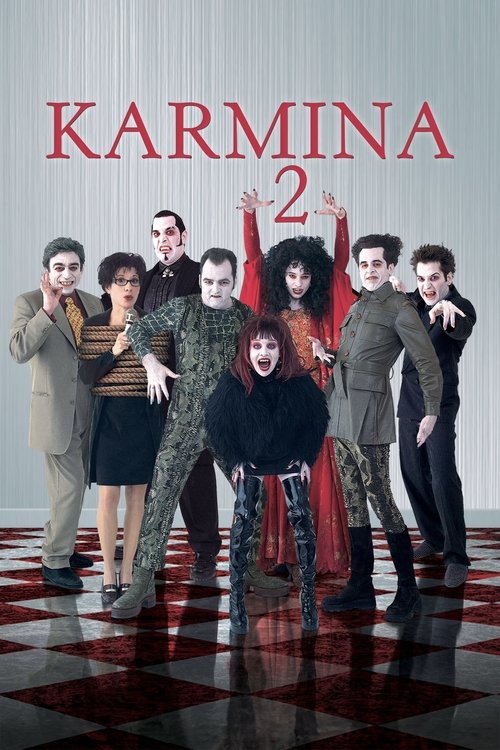
Karmina 2
2001
No user ratings available yet
Representation score: 4.5 out of 10

Representation Score
Fair
1996
Director
Gabriel Pelletier
Runtime
110 minutes
Average Rating
No ratings yetNew Showbiz Analysis
Karmina functions as a moderately progressive text, emphasizing her role as a protagonist who rejects predetermined social roles. The film effectively challenges conventional expectations of domesticity and authority by focusing on her independence. The narrative explores the tension between heritage and a new environment. While it lacks explicit LGBTQ+ representation, it uses the vampire cliché to challenge traditional social dynamics and explore themes of coexistence. Ultimately, the film's emphasis on individual autonomy over systemic familial obligations provides a nuanced departure from standard moralizing structures in traditional genre cinema.
Category Breakdown
The story focuses on a traditional romance between Karmina and Philippe. There is no depiction of LGBTQ+ identities or same-sex relationships.
Karmina acts as a strong female lead, rejecting a forced marriage and prioritizing her own decisions. The film challenges traditional male authority by highlighting her independence.
The story uses a fish-out-of-water plot, moving characters from Transylvania to Quebec. The vampire theme serves as a metaphor for cultural integration and the 'other.'
The plot critiques traditional institutions by rejecting an arranged marriage. It introduces tension between supernatural elements and a church organist’s relationship.
There are no visible or invisible disabilities portrayed in the story.
Present on Screen
Limited or Absent
Official Synopsis
Karmina, a young vampire, flees her Translylvanian castle where she must marry the horrible Vlad to please her father, the mean Baron, and her mother, the eccentric Baronness.
2001
1979
1993
1995

2006
2023

1993
1998
No reviews yet. Be the first to share your thoughts on this movie!
Use the rating form above to leave a star rating and optional review.