
Naked In The Sun
1957
No user ratings available yet
Diversity score: 3.1 out of 10
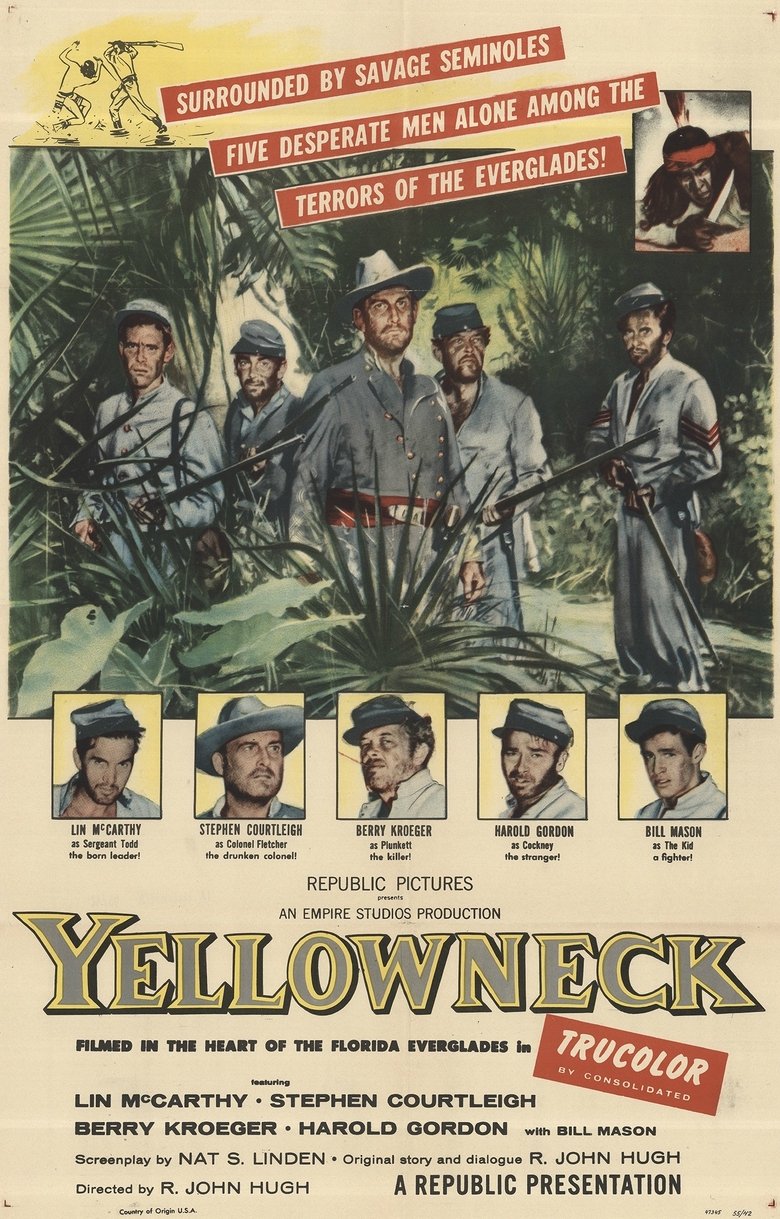
1955
PassedDirector
R. John Hugh
Runtime
83 minutes
Average Rating
No ratings yetSynopsis
A disgraced Confederate Colonel who has deserted his command flees to the Everglades where he encounters a disparate group of four other Southern deserters. Together they struggle to find their way out of the swamp and resolve their own personal demons under the eyes of hostile Seminoles as they battle to survive the elements and each other.
Overall Score
Limited
Category Breakdown
LGBTQ+ Representation
The film focuses on a group of male deserters navigating survival. There is no evidence of non-cisnormative identities or same-sex intimacy, adhering to 1950s heteronormative constraints.
Gender Representation
The central conflict is driven entirely by male soldiers. The narrative emphasizes masculine struggle and traditional leadership dynamics, offering no indication of female agency or subverted gender hierarchies.
Racial & Ethnic Diversity
The story features a conflict between Southern deserters and the Seminole people. However, the Indigenous population appears primarily as a hostile external force rather than complex characters.
Religious & Cultural Diversity
The setting is rooted in the traditional structures of the American South and the Confederate military. The narrative focuses on individual survival rather than broader institutional or cultural critiques.
Disability Representation
There are no specific mentions of characters navigating physical or neurodivergent disabilities. While 'personal demons' are mentioned, they lack specific clinical or descriptive context.
Strengths
Areas for Improvement
AI Analysis
Yellowneck is a traditional mid-century genre piece that prioritizes established historical hierarchies. The narrative architecture centers on masculine-centric survival tropes and the perspectives of white Southern men. The film relies on conventional Western and War drama tropes. It offers limited opportunities for intersectional representation, focusing instead on the internal conflicts of a specific group of male deserters. Ultimately, the work reinforces the social and gendered expectations of its era, providing a narrow view of the historical landscape through a strictly traditional lens.
No reviews yet. Be the first to share your thoughts on this movie!
Use the rating form above to leave a star rating and optional review.