Find another title
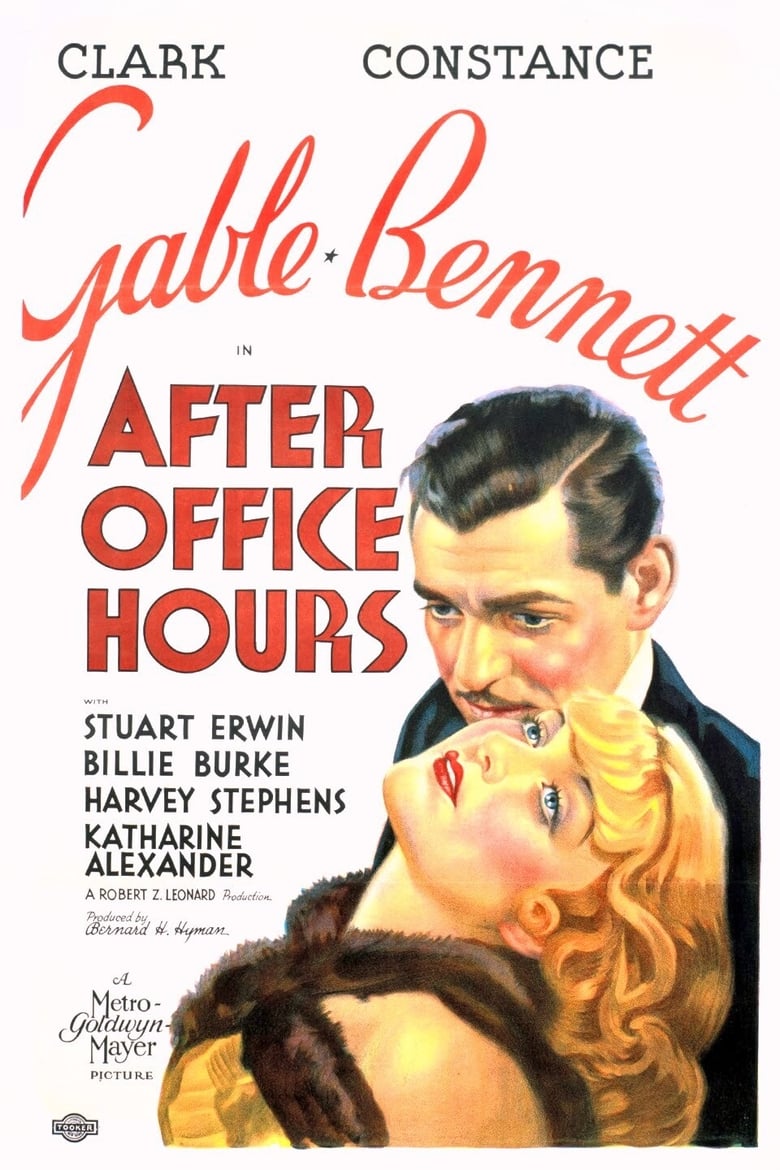
After Office Hours
1935
ApprovedDirector
Robert Z. Leonard
Runtime
72 minutes
Average Rating
No ratings yetSynopsis
A managing editor sends a socialite reporter to spy on her boyfriend, mixed up in murder.
Where to Watch
Diversity & Representation
Overall Score
Limited
Category Breakdown
LGBTQ+ Representation
The film follows a heteronormative romantic framework centered on a reporter and her boyfriend. There is no evidence of non-cisnormative identities or queer perspectives.
Gender Representation
A female protagonist occupies a professional role as a reporter, offering a slight departure from domestic archetypes. However, the plot remains driven by romantic entanglement.
Racial & Ethnic Diversity
The production likely reflects the era's standard casting practices, centering on white, Anglo-Saxon protagonists. The narrative appears to mirror the homogeneous social hierarchies of 1935.
Religious & Cultural Diversity
The setting focuses on Western social strata, involving socialites and editors. It operates within the established social order without challenging conventional morality or institutions.
Disability Representation
There is no information available regarding the inclusion of characters with physical or neurodivergent traits.
Strengths
- Features a female protagonist in a professional role as a reporter.
Areas for Improvement
- Lacks representation of LGBTQ+ identities or non-cisnormative perspectives.
- Relies on traditional gendered motivations driven by romantic entanglement.
- Reflects the homogeneous racial and social hierarchies of the 1930s.
- Shows no evidence of disability representation or neurodivergent characters.
AI Analysis
After Office Hours is a conventional 1930s crime-comedy that adheres strictly to the studio system's narrative structures. While it features a woman in a professional capacity, the story's momentum is tied to traditional romantic motivations. The film lacks intersectional complexity, functioning instead as a standard genre piece. It reflects the era's social hierarchies rather than offering any systemic critique or diverse representation. Ultimately, the work operates within the narrow, homogeneous frameworks typical of mid-century Hollywood storytelling.
Rate this Movie
Reviews
No reviews yet. Be the first to share your thoughts on this movie!
Use the rating form above to leave a star rating and optional review.