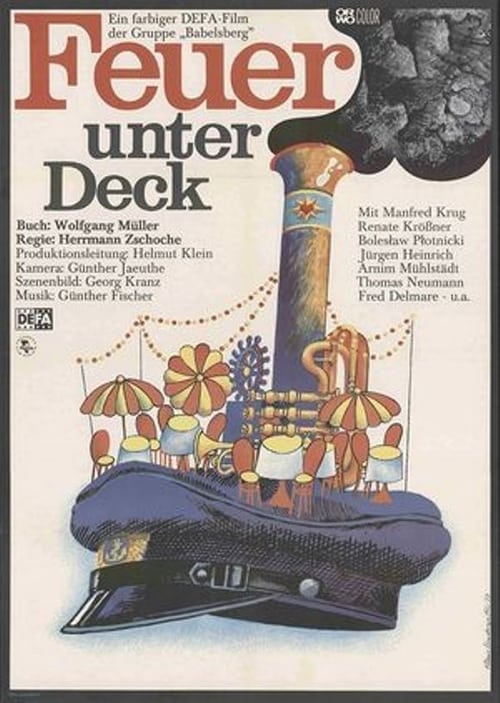
Fire Below Deck
1982
No user ratings available yet
Representation score: 3.2 out of 10
Representation Score
Minimal
1971
Director
Kurt Hoffmann
Runtime
93 minutes
Average Rating
No ratings yetNew Showbiz Analysis
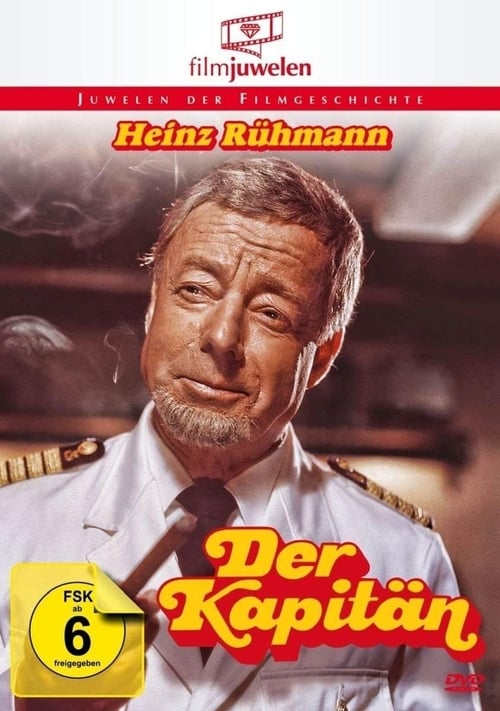
The film opens with the *Julia* cutting through the waves, a self-contained world where the captain’s word is the only law. This 1971 West German comedy sells a defense of paternalistic authority, pitting the experienced, rough-hewn Captain Ebbs against the sterile modernity of bureaucratic auditors and professional women. The camera lingers on Rühmann’s face, treating his internal doubt as the primary drama, while the "modern" elements—represented by Dr. Lund and Consul Carstens—are framed as either passive observers or pedantic obstacles. The sold meaning is clear: tradition is resilient and superior, and the competent male leader is the only one who can navigate the chaos of the new world. The film’s argument rests on the logbook, a physical object that carries the weight of history and authority. Ebbs writes in it; the bureaucrats try to audit it. This prop serves as the thesis: the written record of the captain’s authority is the ultimate arbiter. The ending rewards the restoration of this order, with the ship departing into the horizon, leaving the audience with the image of the institution continuing. The film does not capitulate to neoliberal compromise; instead, it affirms the old hierarchy, treating the captain’s intuition and rank as the moral center. The last image is a verdict on the value of experience over credentials, and the camera loves the man who holds the pen.
Category Breakdown
Absent. The 1971 West German cast is entirely heterosexual, with no same-sex intimacy, queer coding, or identity discussion depicted on screen.
Limited. Johanna Matz plays Dr. Lund, a professional woman who observes the bridge but lacks operational authority. The film centers male competence, with the female lead serving as a passive witness to the captain’s command.
Absent. The crew and passengers are exclusively white German, with no non-white characters, ethnic tension, or cross-cultural interaction present in the narrative.
Present. The ship operates as a traditional hierarchy where the captain’s word is law. Experience and rank are treated as superior to bureaucratic credentials, affirming paternalistic authority as the moral center.
Absent. All characters are physically able-bodied, with no disability, impairment, or medical condition depicted as part of the plot or character development.
Present on Screen
Limited or Absent
Official Synopsis
Captain Ebbs is an older, experienced seaman who has, however, only sailed on freighters. While his current old barge, the Martin Luther, has to go into the shipyard for an overhaul, the shipping company gives him command of the elegant cruise ship Julia to temporarily replace a colleague who has fallen ill. The rough Ebbs finds his way into his new job only with difficulty and initially puts his foot in his social mouth.
1982

1991

1970

1968

1957
1984
1966

1981
No reviews yet. Be the first to share your thoughts on this movie!
Use the rating form above to leave a star rating and optional review.