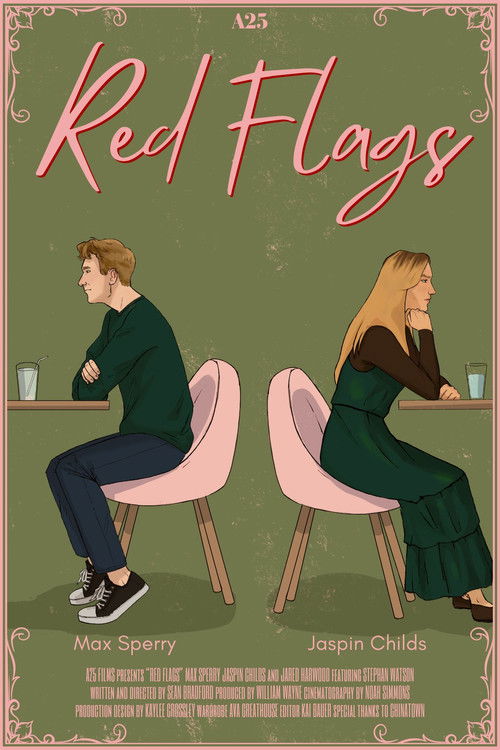
Red Flags
2026
No user ratings available yet
Representation score: 0.6 out of 10

Representation Score
Limited
2026
Director
David Moragas
Runtime
100 minutes
Average Rating
No ratings yetNew Showbiz Analysis
The film opens in the quiet, cluttered apartment of Marc and Eudald, a graphic designer and his partner of six years, where the air is thick not with passion but with the weight of unspoken expectations. David Moragas’s *Another Man* sells a vision of queer domesticity that is less about the thrill of discovery and more about the slow erosion of comfort. The central tension is not a dramatic betrayal but a bureaucratic one: Eudald’s growing impatience to "cement" their relationship through formal milestones begins to suffocate Marc, who finds himself trapped in an emotional deadlock. This is a film about the friction between the desire for security and the fear of being pinned down, played out in the mundane details of shared living spaces. The sold meaning is that stability, while desirable, can become a cage when one partner insists on a script the other has not signed. The camera lingers on the small, awkward silences between the men, treating their hesitation as a form of integrity rather than a flaw. Marc’s attention to a new neighbor is not a moral failing but a symptom of his need for air, a reminder that his identity exists outside the binary of "together" or "apart." The film’s argument is that emotional ambiguity is a valid state of being, challenging the Western default that relationships must progress through a linear series of commitments to be legitimate. The ending, implied by the "emotional deadlock," leaves the couple in a state of unresolved tension, refusing to offer a neat resolution where one partner capitulates or the other leaves. This refusal to tidy up the mess is the film’s moral verdict: that the complexity of queer life cannot be reduced to a single narrative of triumph or tragedy. The film’s limitation is its insularity; the cast is entirely white and able-bodied, reflecting the specific, homogeneous reality of its Catalan setting rather than a broader political statement. Yet within that bounded world, the film succeeds in portraying the quiet, persistent labor of maintaining a relationship when the terms of engagement are no longer clear.
Category Breakdown
The film centers a six-year same-sex partnership in Sant Antoni, treating their domestic stability as the default baseline. Queer intimacy is depicted with mundane specificity, from shared work to neighborly friction, without requiring external validation.
Marc and Eudald navigate a power imbalance where Eudald’s impatience to cement the relationship creates emotional deadlock for Marc. Marta’s subplot mirrors these vicissitudes, but the film focuses on relational dynamics rather than challenging broader gender hierarchies.
The cast consists entirely of Catalan and Spanish actors, with no non-white characters appearing in the credited ensemble or described plot points. This reflects a homogeneous local setting rather than a broader political statement.
The film critiques the pressure to formalize queer relationships through traditional milestones, framing Eudald’s desire for permanence as a source of stress. It portrays secular, urban Catalan domestic life where emotional ambiguity is valued over institutional certainty.
No characters with physical, sensory, or cognitive disabilities are named in the cast list, synopsis, or plot summary. The narrative focuses exclusively on romantic and interpersonal conflicts within an able-bodied framework.
Present on Screen
Limited or Absent
Official Synopsis
Marc and Eudald have been in a stable relationship for six years. Their life seems to run smoothly but even though together they make a good team, Eudald’s increasing impatience to cement their relationship is starting to get to to Marc, who finds himself caught in an emotional deadlock.
2026

2016

2016

2004

2020

2009

2013

2022
No reviews yet. Be the first to share your thoughts on this movie!
Use the rating form above to leave a star rating and optional review.