Humanité
1999
No user ratings available yet
Representation score: 6.3 out of 10
Representation Score
Fair
2011
Not RatedDirector
Bruno Dumont
Runtime
110 minutes
Average Rating
No ratings yetNew Showbiz Analysis
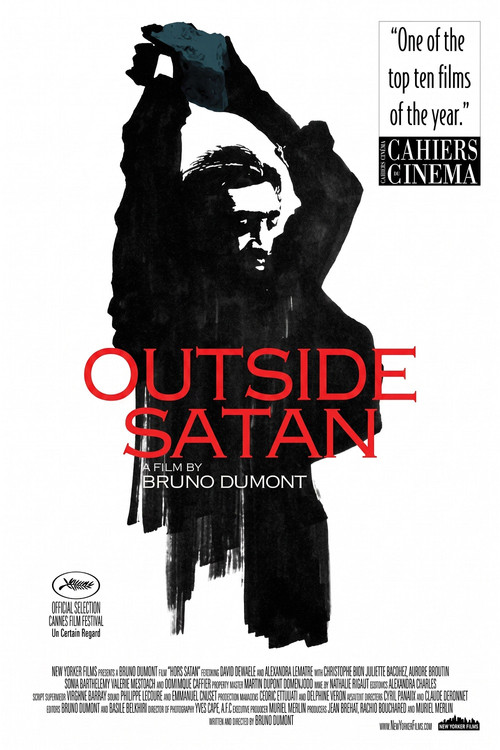
Outside Satan is a film that prioritizes existential exploration over demographic variety. It functions as a closed ecosystem, reflecting the specific demographic constraints of its rural French setting. While the work lacks traditional representation regarding race, gender, and sexual orientation, it achieves progressive value through its radical deconstruction of moral certainty. It replaces stable social structures with a postmodern exploration of the human condition. Ultimately, the film's strength lies in its refusal to provide a traditional moral compass, opting instead to examine the breakdown of social roles and institutional ethics.
Category Breakdown
The film does not feature prominent LGBTQ+ characters or stories centered around non-assuming gender matches what was assigned at birth identities. It focuses on a desolate landscape where relationships are broken and fragmented.
The narrative centers on male interactions in a harsh environment. While it avoids traditional leadership roles by showing characters as inept or disconnected, it lacks strong female protagonists who take charge.
The film portrays a localized, homogeneous rural population in northern France. There are no significant racial or ethnic blends, and no non-white characters drive the plot.
Dumont explores moral relativism and the deconstruction of institutional authority. The film challenges Western institutional morality by framing violence through an existential lens, rather than purely punitive measures.
Psychological distress and existential dread are portrayed as universal human conditions rather than specific disabilities. No characters with disabilities appear as active agents or objects of mockery.
Present on Screen
Limited or Absent
Official Synopsis
Along the Côte d'Opale, near a hamlet, with its dunes and marshes, lives a mysterious wanderer from nowhere who struggles along, poaches, prays, and builds fires.
1999

2016
2019
2009
2016

2021
2015

2016
No reviews yet. Be the first to share your thoughts on this movie!
Use the rating form above to leave a star rating and optional review.