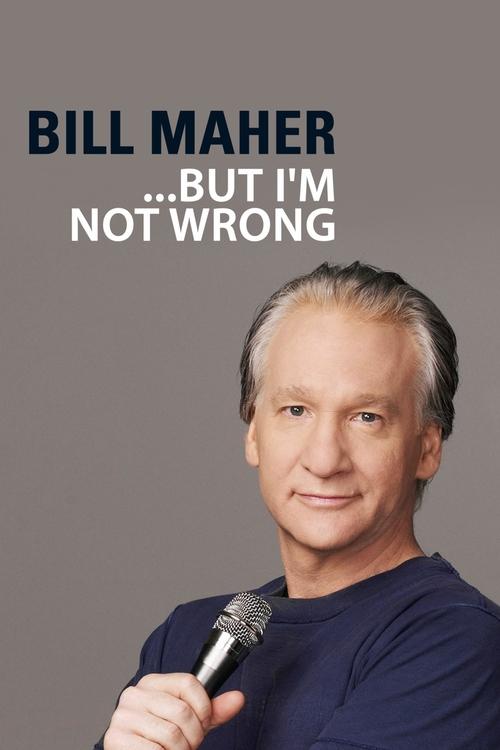
Bill Maher: But I'm Not Wrong
2010
No user ratings available yet
Diversity score: 6.6 out of 10
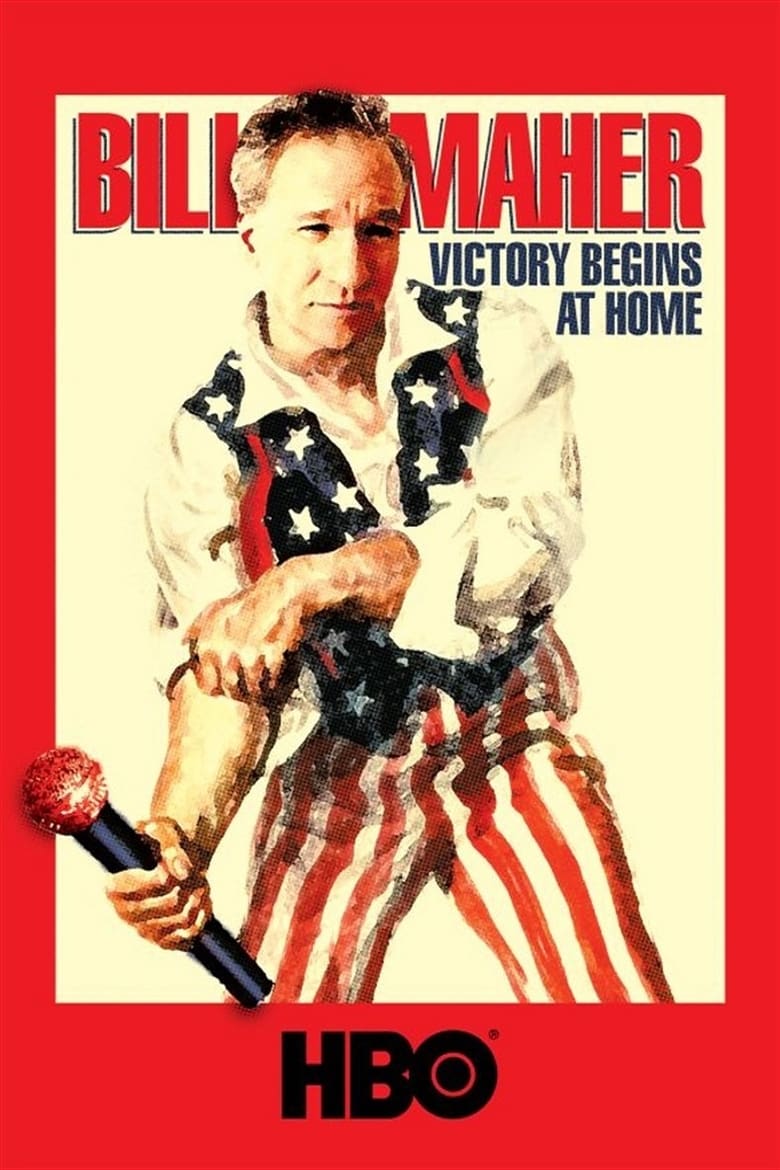
2003
Director
John Moffitt
Runtime
60 minutes
Average Rating
No ratings yetSynopsis
Maher addresses contemporary political, social and cultural topics -- Iraq, President Bush and the so called Axis of Evil. The opinionated Maher said about Victory Begins at Home: "We've heard everything about the War on Terrorism except what we can actually do to help win it. The government used to do that for us through propaganda (the positive kind) posters, so taking my cue from the great old posters of World War I and World War II ('Loose Lips Sink Ships,' 'Buy War Bonds,' 'Plant a Victory Garden,' etc.) I commissioned artists to paint the posters our government today should be putting out to help us win this war."
Overall Score
Fair
Category Breakdown
LGBTQ+ Representation
The special engages with sexual politics and social liberties common to the era. It lacks specific queer narratives or non-cisnormative character arcs, focusing instead on broader social restrictions.
Gender Representation
Maher satirizes rigid gender roles and the friction of evolving political correctness. The performance critiques patriarchal norms through observational satire rather than explicit character-driven agency.
Racial & Ethnic Diversity
The solo stand-up format inherently limits racial and ethnic representation within the frame. While addressing global geopolitical complexities, the special lacks diverse casting or intersectional dynamics.
Religious & Cultural Diversity
The special excels at deconstructing Western institutions and religious fundamentalism. Maher uses a postmodern satirical framework to challenge religious authority and state-sponsored narratives.
Disability Representation
There is no discernible evidence regarding the portrayal of physical or neurodivergent disabilities. The monologue-driven satire does not feature disability as a central narrative component.
Strengths
Areas for Improvement
AI Analysis
This special functions primarily as a vehicle for institutional critique rather than a showcase for demographic breadth. Its strength lies in a systemic interrogation of religious and political authority through a secular, skeptical lens. While the performance challenges traditional Western moralities and the cultural consensus of the early 2000s, it remains limited by its format. As a solo monologue, it lacks the diverse casting and intersectional character dynamics found in narrative cinema. Ultimately, the work prioritizes the deconstruction of hegemony over individual representation. It succeeds in its thematic scrutiny of power but offers little in the way of diverse on-screen identities.
2010
2007
2005
2000
2015
2010
2008
2013

2020
2017
2018

2016
No reviews yet. Be the first to share your thoughts on this movie!
Use the rating form above to leave a star rating and optional review.