Find another title
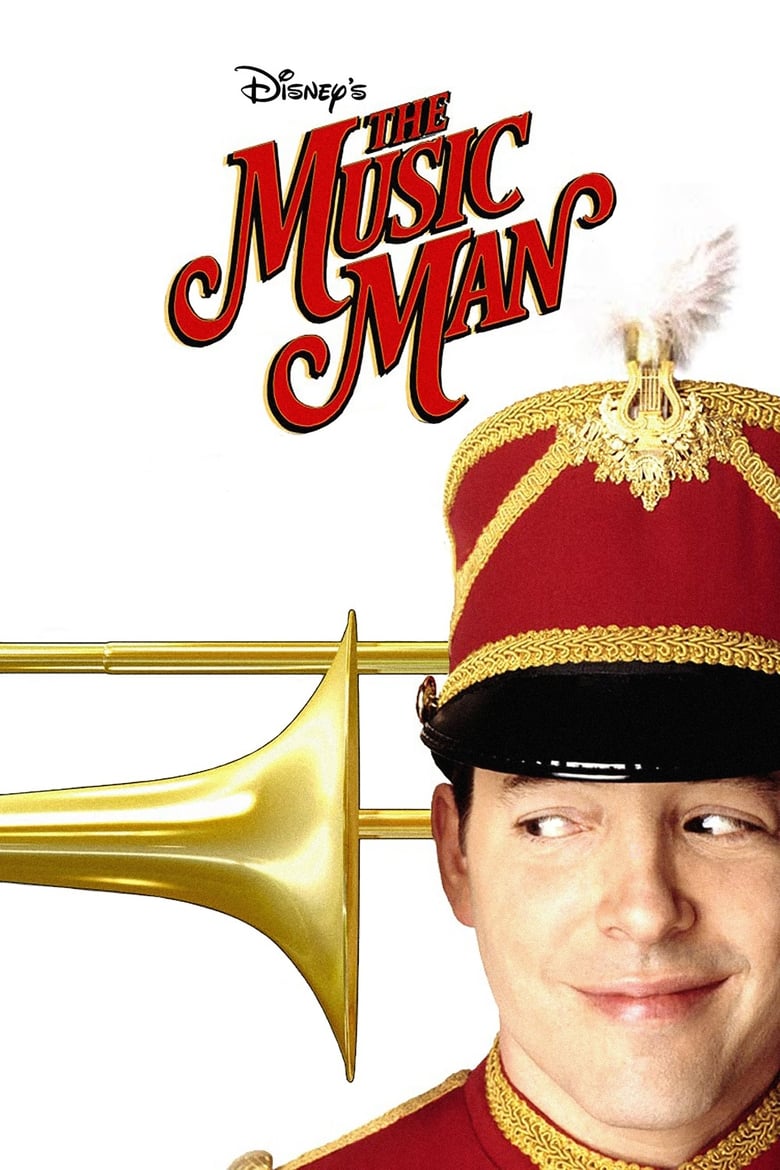
The Music Man
2003
GDirector
Jeff Bleckner
Runtime
150 minutes
Average Rating
No ratings yetSynopsis
Con man "Professor" Harold Hill arrives in River City, Iowa, promising that he can teach the small town's children how to play in a magnificent marching band. It's all part of a big swindle, but falling in love with the town librarian wasn't part of the deal.
Where to Watch
Diversity & Representation
Overall Score
Limited
Category Breakdown
LGBTQ+ Representation
The film follows a traditional romantic structure centered on heteronormative courtship. There are no queer narratives or non-cisnormative gender identities present in this adaptation.
Gender Representation
Marian Paroo provides intellectual agency and serves as a moral compass. However, the plot relies on conventional archetypes where the male lead drives the momentum through social manipulation.
Racial & Ethnic Diversity
Set in 1910s Iowa, the story reflects the era's social constraints. The small-town community is largely homogeneous, offering minimal racial or ethnic intersectionality.
Religious & Cultural Diversity
The narrative emphasizes traditional Western values and community cohesion. It focuses on restorative social reintegration rather than disrupting established institutional or social structures.
Disability Representation
There is no documented evidence regarding the inclusion or portrayal of characters with visible or invisible disabilities in this production.
Strengths
- Marian Paroo is depicted as a strong-willed character with significant intellectual agency.
- The film maintains high period accuracy regarding the social structures of 1910s Iowa.
Areas for Improvement
- The narrative lacks racial and ethnic intersectionality, reflecting a very homogeneous community.
- The plot relies heavily on conventional gender archetypes and heteronormative romantic tropes.
- There is no visible representation of disability or LGBTQ+ identities.
AI Analysis
This adaptation of *The Music Man* functions as a faithful recreation of a classic musical era. It prioritizes period accuracy and traditional storytelling over modern intersectional representation. The film adheres to mid-century Americana tropes, focusing on a homogeneous community and conventional social hierarchies. While it captures the spirit of the original musical, it lacks intentionality in diversifying its cast or narrative arcs. Ultimately, the production serves as a standard, traditionalist period piece that mirrors the demographic and social norms of the early 20th century.
Rate this Movie
Reviews
No reviews yet. Be the first to share your thoughts on this movie!
Use the rating form above to leave a star rating and optional review.