
Every Home Should Have One
1970
No user ratings available yet
Representation score: 1.8 out of 10
Representation Score
Limited
1999
RDirector
Eric Weber
Runtime
88 minutes
Average Rating
No ratings yetNew Showbiz Analysis
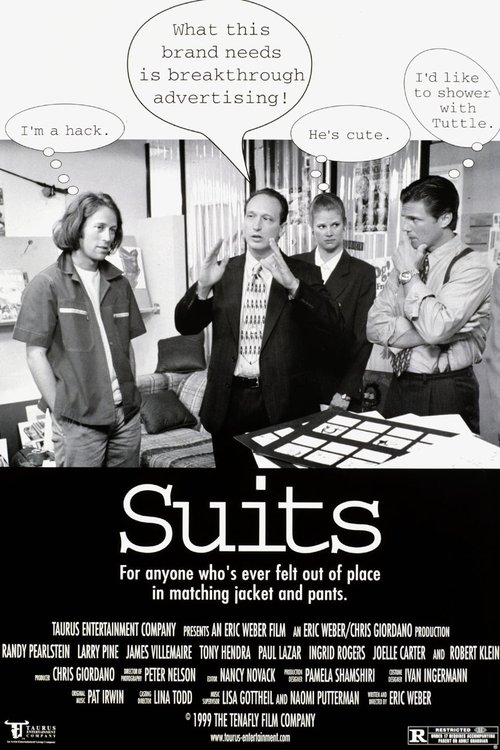
Suits (1999) serves primarily as a satire of the advertising industry, focusing on the professional rivalry between two New York firms. The narrative tension arises from the competition to market a feminine hygiene product, centered on commercialism. The film lacks significant depth in reflecting multiple aspects of identity, as the plot prioritizes corporate dynamics over individual character development. While it touches on gendered consumerism, the decision-making power remains in male-dominated roles. Overall, the film presents a conventional view of the 1990s corporate world. It fails to challenge traditional structures or offer diverse representation.
Category Breakdown
The film does not include any explicit references to LGBTQ+ characters or non-cisgender identities. The story revolves around corporate competition in a traditional workplace setting.
The plot centers on marketing a feminine hygiene product, but the key decisions and actions remain in the hands of male leaders. The film explores gendered products without challenging traditional gender roles.
The story portrays a conventional, homogeneous corporate environment typical of late-90s satire. There is no indication of intentional racial diversity or diverse character's ability to drive the story.
The satire targets consumerism and capitalist aesthetics through corporate messaging. However, it adheres to established industry structures without deconstructing them.
There is no information about the inclusion of characters with visible or invisible disabilities.
Present on Screen
Limited or Absent
Official Synopsis
A deodorant company with a product called "Smell No Mo" pits two rival ad agencies in a race to come up with a campaign for a new-fangled sanitary napkin called Vorcan. The advertising satire follows the New York firm of Cranston & Co. as they fight rival Hoffman & Partners. Cranston fires his creative director which puts a young copywriter with a literature degree on the front line, even though he doesn't want to be. The contest comes down to a schmaltzy campaign by Hoffman with music by Air Supply that uses the tagline "Vorcan: your own personal air supply." or a more down to earth campaign from Cranston of "The pad ain't bad!"
1970

1989
1961

2006

2001

1999
1985

2007
No reviews yet. Be the first to share your thoughts on this movie!
Use the rating form above to leave a star rating and optional review.