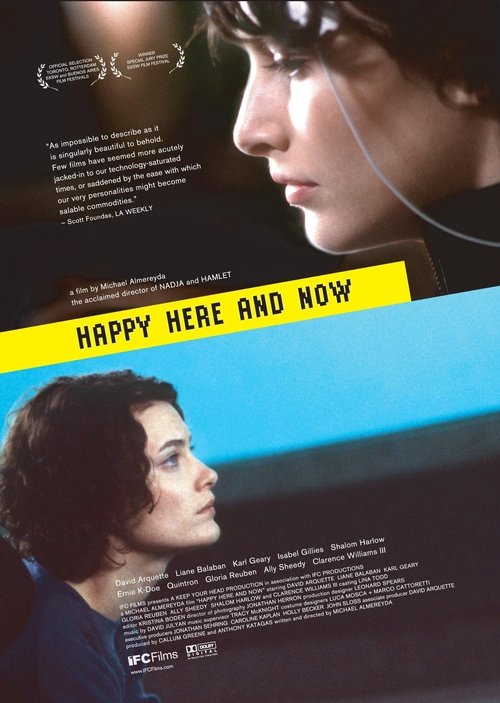
Happy Here and Now
2002
No user ratings available yet
Diversity score: 4.3 out of 10
2009
PGDirector
James Kerwin
Runtime
89 minutes
Average Rating
No ratings yetSynopsis
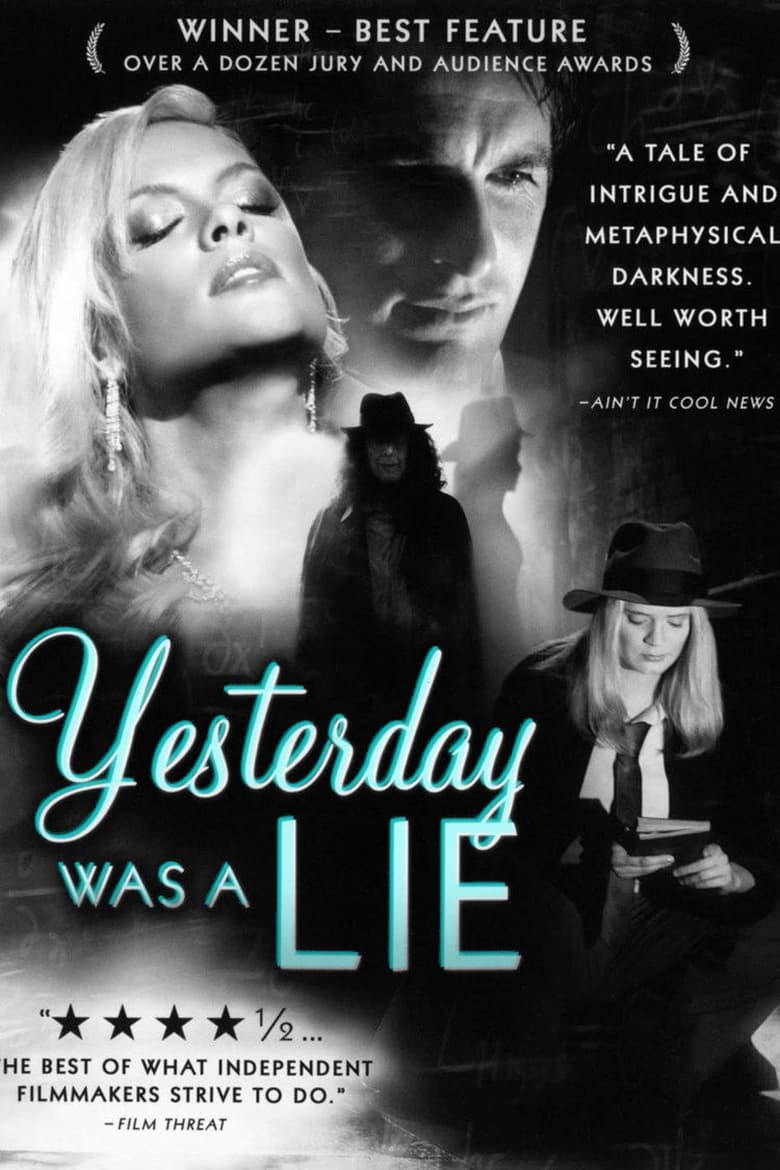
Hoyle, a girl with a sharp mind and a weakness for bourbon, finds herself on the trail of a reclusive genius. Along the way, her reality becomes disconnected and surreal. Her loyal partner and an ethereal lounge singer help her along the way, but ultimately she must turn within and confront her own shadow.
Overall Score
Fair
Category Breakdown
LGBTQ+ Representation
The film lacks explicit depictions of LGBTQ+ identities or same-sex intimacy. While the surreal atmosphere allows for fluid interpretations, there is no evidence of queer-coded characters or narratives critiquing heteronormativity.
Gender Representation
Hoyle serves as a strong female protagonist with significant intellectual agency and autonomy. By centering her psychological journey, the film subverts traditional noir tropes of feminine passivity.
Racial & Ethnic Diversity
The cast appears predominantly homogeneous, reflecting the demographic norms of a 1940s Hollywood setting. There is no evidence of color-blind casting or intentional racial diversity.
Religious & Cultural Diversity
The narrative emphasizes postmodern subjectivity and the instability of reality. While it explores progressive philosophical perspectives, it lacks explicit critiques of Western or capitalist institutions.
Disability Representation
Themes of psychological fragmentation serve as stylistic genre devices rather than intentional portrayals of neurodivergence. There is little evidence of meaningful representation regarding mental health or disability.
Strengths
Areas for Improvement
AI Analysis
Yesterday Was a Lie succeeds in subverting gendered expectations by placing a highly capable, autonomous woman at the center of its mystery. Hoyle’s intellectual agency provides a refreshing departure from the passive female archetypes often found in neo-noir. However, the film is limited by its adherence to period-specific demographics. The casting remains largely homogeneous, mirroring the mid-20th-century studio system rather than challenging it through diverse racial or ethnic representation. While the film explores complex psychological and philosophical themes, it lacks explicit intersectional visibility. It functions more as a stylistic character study than a vehicle for social or identity-based critique.
No reviews yet. Be the first to share your thoughts on this movie!
Use the rating form above to leave a star rating and optional review.