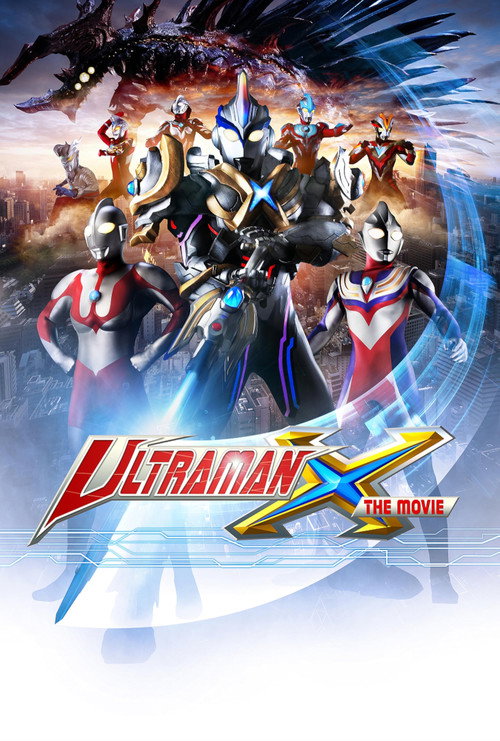
Ultraman X The Movie: Here He Comes! Our Ultraman
2016
No user ratings available yet
Diversity score: 2.8 out of 10

2009
Director
Kiyotaka Taguchi
Runtime
15 minutes
Average Rating
No ratings yetSynopsis
A fishing boat is attacked at sea by a gigantic, hairy monster. After examining the sole survivor (Kanji Tsuda), scientific adviser Dr Murakami (Shiro Sano) suspects the culprit is a “Keukegen spectre”, a shaggy supernatural beast from Japanese folklore. The announcement leads reporter Hideo Akihara (Ken Osawa) to a forest shrine dedicated to the Keukegen Geharha, where he finds several worshipers and learns that an ancient seal containing the monster has been broken.
Overall Score
Limited
Category Breakdown
LGBTQ+ Representation
The film follows a traditional monster-hunt structure. There is no evidence of queer themes or non-cisnormative identities within the narrative.
Gender Representation
The professional hierarchy is male-dominated, featuring a survivor, scientist, and reporter. It lacks female characters in positions of high agency or intellectual authority.
Racial & Ethnic Diversity
The production is ethnically homogeneous and centered on Japanese folklore. It provides cultural specificity without attempting to challenge broader casting norms.
Religious & Cultural Diversity
The plot utilizes Japanese spiritualism and forest shrines as primary drivers. These elements serve as the source of conflict rather than subjects of critique.
Disability Representation
The film provides no evidence regarding the portrayal of neurodivergence or physical disabilities. No characters are identified with these specific traits.
Strengths
Areas for Improvement
AI Analysis
Geharha: The Dark and Long-Haired Monster operates as a conventional tokusatsu genre piece. It prioritizes mythological spectacle and creature-feature tropes over the exploration of intersectional identities or social hierarchies. The narrative relies on a standard investigative framework, focusing on a male-centric cast of scientists and reporters. This structure adheres to mid-century sci-fi tropes rather than seeking to subvert them. While the film offers cultural specificity through its use of Japanese folklore, it remains a traditional genre work. It lacks engagement with progressive representation or systemic social critique.
No reviews yet. Be the first to share your thoughts on this movie!
Use the rating form above to leave a star rating and optional review.