Find another title
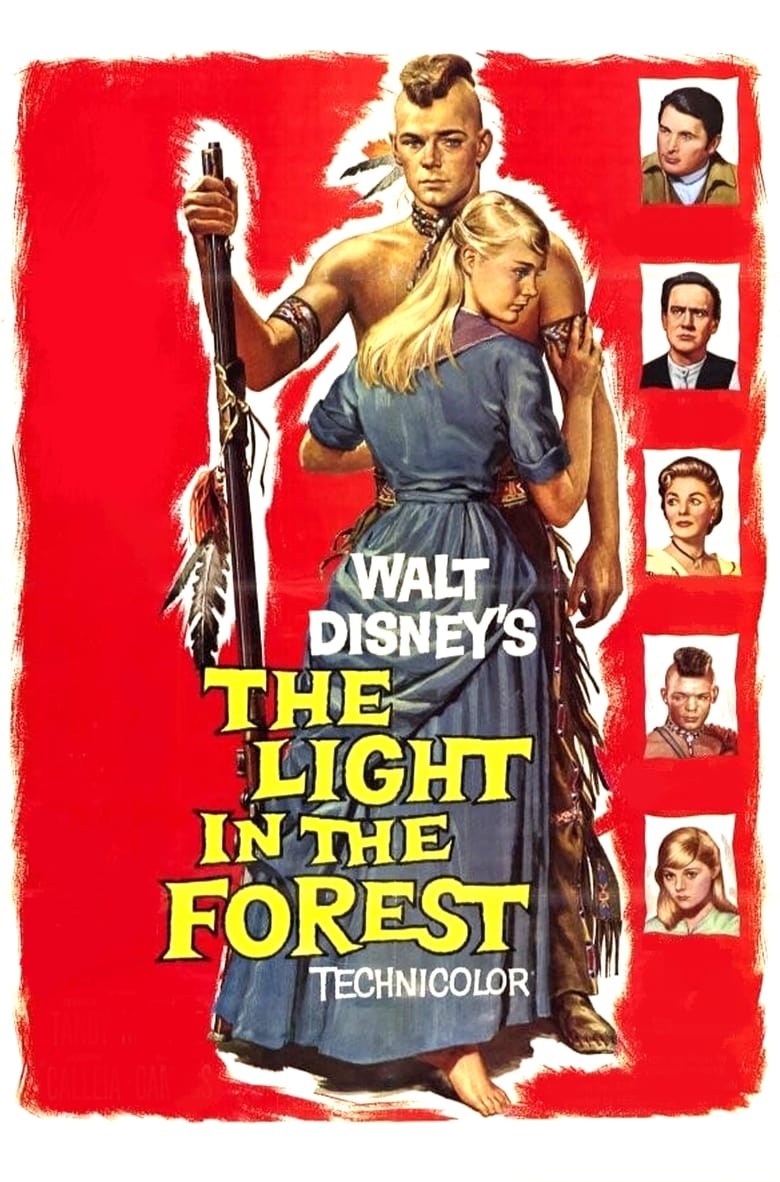
The Light in the Forest
1958
NRDirector
Herschel Daugherty
Runtime
89 minutes
Average Rating
No ratings yetSynopsis
A young white man who spent his whole life raised by a Native American tribe is sent to live with his true family and must learn to fit in with the people he was taught to hate.
Where to Watch
Diversity & Representation
Overall Score
Limited
Category Breakdown
LGBTQ+ Representation
The film lacks any discernible presence of LGBTQ+ characters or non-heteronormative identities. The narrative relies on traditional romantic structures typical of the 1950s.
Gender Representation
June Allyson occupies a central role, yet her character reinforces traditional gender hierarchies. The power dynamics remain rooted in established patriarchal structures without disrupting the social order.
Racial & Ethnic Diversity
The story explores cultural friction through a white protagonist raised by a Native American tribe. However, the focus remains on assimilation into white settler society rather than intersectional agency.
Religious & Cultural Diversity
As a traditional Western, the film emphasizes pioneer values and frontier life. It reinforces the necessity of settling and lacks any systemic critique of traditional social structures.
Disability Representation
There are no prominent depictions of visible or invisible disabilities that drive the narrative or provide character depth.
Strengths
- The central premise introduces a conflict of cultural belonging through the protagonist's unique upbringing.
- The film provides a clear exploration of the friction between different cultural identities.
Areas for Improvement
- The narrative reinforces patriarchal power dynamics rather than subverting them.
- The portrayal of cultural identity focuses on assimilation into settler society rather than true agency.
- The film lacks any representation of LGBTQ+ identities or non-heteronormative characters.
AI Analysis
The film functions as a standard mid-century frontier drama that prioritizes the preservation of established social norms. While the premise of a man caught between two cultures offers a baseline for identity discussions, the execution remains tethered to colonial assimilation themes. Representation is limited by the era's conventions. The narrative architecture reinforces patriarchal structures and traditional Western values rather than challenging them. The cast is predominantly white, reflecting the standard casting practices of 1958. Ultimately, the work lacks the intentionality required to provide nuanced or intersectional perspectives. It adheres to conventional character archetypes and traditional dramatic arcs typical of the period.
Rate this Movie
Reviews
No reviews yet. Be the first to share your thoughts on this movie!
Use the rating form above to leave a star rating and optional review.