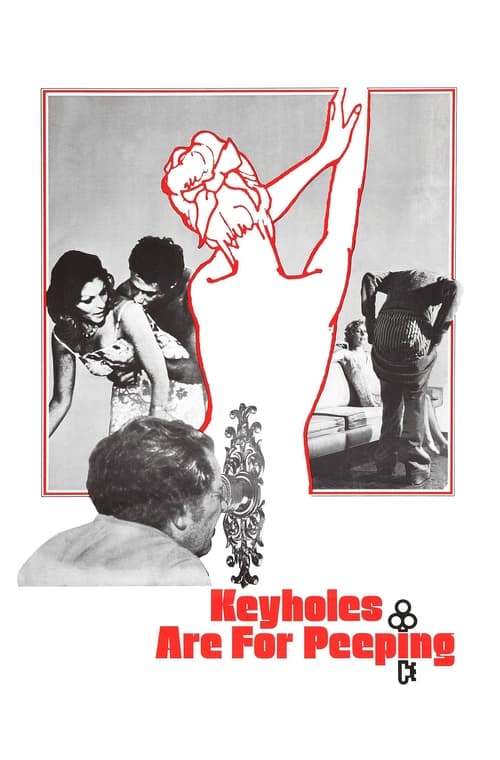
Keyholes Are for Peeping
1972
No user ratings available yet
Representation score: 2.5 out of 10

Representation Score
Minimal
1972
Director
William Walker
Runtime
15 minutes
Average Rating
No ratings yetNew Showbiz Analysis
Life with Video is a product of its time, adhering to the conventional social structures of the early 1970s. The narrative is centered around a singular, heterosexual interaction that lacks complexity or the inclusion of diverse identities. The film's focus on the intimacy provided by early television technology serves as a medium for personal interaction rather than a platform for broader social critique. This results in a lack of meaningful representation for diverse groups and a reliance on traditional gender roles. Ultimately, the work lacks the necessary elements to challenge the status quo, operating within a narrow, traditional framework.
Category Breakdown
The film focuses on a relationship between a male character and a female viewer, which is typical of heterosexual interactions. There is no representation of non-binary or transgender identities, nor any critique of the assumption that everyone is straight or cisgender.
The narrative relies on traditional gender roles where the male character is the active communicator, while the female character primarily receives communication.
The film does not include a diverse cast, and there is no indication of non-Anglo-Saxon actors. The casting appears to reflect the homogeneity of its time.
The film's premise centers on media-driven interactions without engaging in broader cultural, secular, or systemic critiques of Western institutions.
There is no information about characters with visible or invisible disabilities in the film.
Present on Screen
Limited or Absent
Official Synopsis
A male TV personality makes intimate contact with a female viewer through the TV set.
1972

1989

1966

1977

1966

1974

1970

1974
No reviews yet. Be the first to share your thoughts on this movie!
Use the rating form above to leave a star rating and optional review.