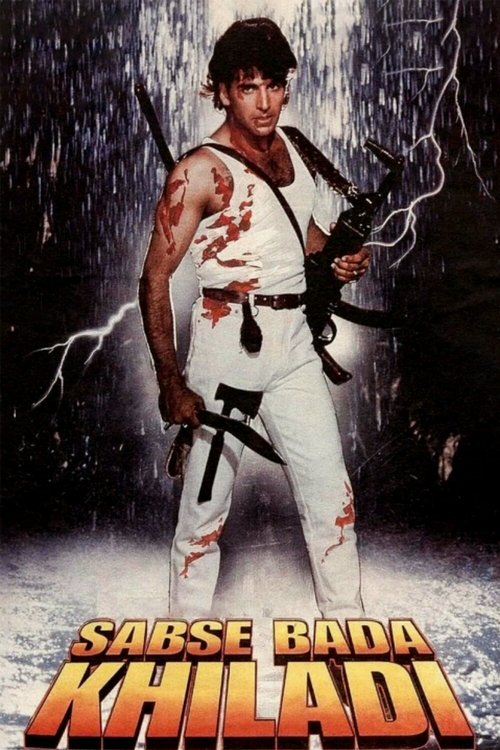
Sabse Bada Khiladi
1995
No user ratings available yet
Diversity score: 3.1 out of 10

2012
Not RatedDirector
Radha Krishna Jagarlamudi
Runtime
135 minutes
Average Rating
No ratings yetSynopsis
A boy is adopted by his grandfather after his parents are murdered. He grows up to be an actor to honor a promise to his dying grandfather that he would perform in a play in his native village. The performance leads him to his parents' murderers.
Overall Score
Limited
Category Breakdown
LGBTQ+ Representation
The film lacks LGBTQ+ characters or non-heteronormative identities. It operates within a traditional framework of romantic and social structures.
Gender Representation
The narrative adheres to conventional gender hierarchies and male authority. Female characters primarily occupy roles within romantic subplots or traditional social structures.
Racial & Ethnic Diversity
The film provides a robust centering of South Indian identity. It prioritizes indigenous philosophical traditions and local linguistic contexts over Western cinematic standards.
Religious & Cultural Diversity
Thematic cores focus on preserving Vedic values and religious institutions. It frames the struggle as a defense of spiritual heritage against secularist norms.
Disability Representation
There is no significant evidence regarding the portrayal of physical or neurodivergent disabilities in the narrative.
Strengths
Areas for Improvement
AI Analysis
Krishnam Vande Jagadgurum is a film deeply committed to cultural preservation and the defense of indigenous knowledge. It succeeds in challenging Western-centric educational paradigms by centering South Indian identity and traditional pedagogical structures. However, this commitment to heritage comes at the cost of progressive representation. The film reinforces traditional social, gender, and religious hierarchies rather than deconstructing them. It prioritizes a conservative moral framework that lacks intersectional depth. Ultimately, the work functions as a tool for cultural agency, yet it remains limited by its adherence to conventional patriarchal and heteronormative standards.
1995

2010

2014

2007

2016

1977
1997

2020

2004
2006
2000

2013
No reviews yet. Be the first to share your thoughts on this movie!
Use the rating form above to leave a star rating and optional review.