Find another title
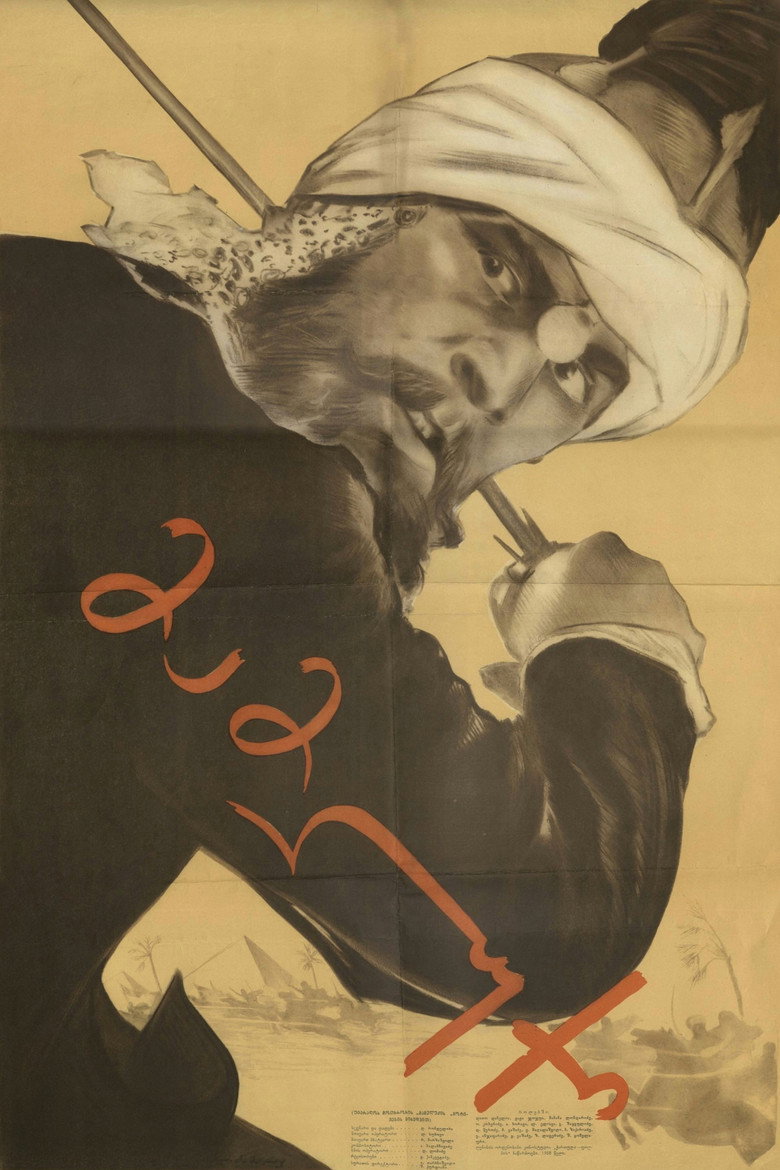
Mameluke
1958
Director
David Rondeli
Runtime
97 minutes
Average Rating
No ratings yetSynopsis
In Arabic, “mameluke” means a white slave, a prisoner. In Egypt, this name was given to prisoners of war who had been sold into slavery from Georgia and other countries of the Caucasus. The action of this drama starts in Georgia in the late 18th century. Two friends are abducted and sold into slavery. One ends up in Egypt, the other - in Venice. Years later, they meet by the ancient pyramids, in the desert where a battle is going on between the armies of Bonaparte and Ali-bey, the ruler of Egypt. In a combat with a French officer, the Mameluke injures him. Falling from his horse onto the sand, the officer exclaims in Georgian: “Vai, nana!” (“Oh, mother!”). And the Mameluke recognizes in him a mate of his childhood games.
Where to Watch
Diversity & Representation
Overall Score
Fair
Category Breakdown
LGBTQ+ Representation
The film focuses on the bond of friendship and shared heritage between two male protagonists. There is no evidence of non-heteronormative identities or narratives critiquing heteronormativity.
Gender Representation
The narrative prioritizes a male-centric epic structure typical of the war and adventure genres. While the struggle against slavery suggests a disruption of traditional hierarchies, female agency is not explicitly detailed.
Racial & Ethnic Diversity
The film centers characters from the Caucasus within Egyptian and Venetian landscapes. This framing disrupts Western-centric explorer tropes by focusing on the experiences of the abducted and enslaved.
Religious & Cultural Diversity
The story challenges imperialist narratives by highlighting the victimization of non-Western subjects. The use of the Georgian phrase 'Vai, nana!' prioritizes localized identity over sweeping Western imperial movements.
Disability Representation
No specific details regarding physical or neurodivergent representation are available in the context.
Strengths
- Centering the agency of displaced individuals from the Caucasus.
- Disrupting Western-centric explorer tropes through the lens of the enslaved.
- Rich tapestry of non-Anglo-Saxon perspectives including Georgian and Egyptian identities.
Areas for Improvement
- Lack of explicit female agency or detailed character arcs for women.
- Absence of non-heteronormative identities or LGBTQ+ narratives.
- Heavy reliance on traditional masculine tropes common to the war genre.
AI Analysis
Mameluke offers a compelling departure from Eurocentric historical dramas by centering the experiences of Caucasian captives. The narrative uses the Napoleonic Wars as a backdrop to explore displacement and the human cost of systemic bondage. The film's strength lies in its intersectional approach, weaving together Georgian, Egyptian, and French identities. By focusing on the shared trauma of the enslaved rather than the perspective of the conquerors, it subverts traditional colonialist hierarchies. However, the film appears heavily weighted toward masculine adventure tropes. The lack of visible female character arcs and the absence of LGBTQ+ representation limit its overall diversity profile.
Rate this Movie
Reviews
No reviews yet. Be the first to share your thoughts on this movie!
Use the rating form above to leave a star rating and optional review.