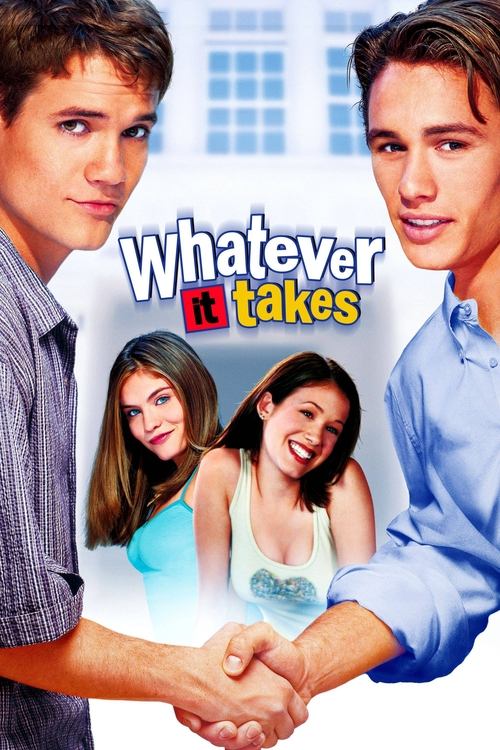
Whatever It Takes
2000
No user ratings available yet
Representation score: 2.8 out of 10

Representation Score
Minimal
1999
PG-13Director
John Schultz
Runtime
91 minutes
Average Rating
No ratings yetNew Showbiz Analysis
Drive Me Crazy is a quintessential late-90s suburban romantic comedy that prioritizes conventional genre clichés over social depth. While the female lead, Nicole, demonstrates individual ability to act, the film remains tethered to the assumption that everyone is straight or cisgender, and traditional romantic structures. The production reflects the era's commercial constraints, presenting a singular, predominantly white demographic as the social default. This homogeneity extends to the lack of representation for LGBTQ+ individuals and people with disabilities. Ultimately, the film serves as an escapist narrative that avoids challenging established social hierarchies or providing perspectives that reflect multiple aspects of identity, focusing instead on the social stratification of high school life.
Category Breakdown
The film does not feature any notable LGBTQ+ characters or narratives. Romantic tension is focused solely on a heterosexual relationship, omitting engagement with queer perspectives.
Nicole plays a significant role in driving the central plot. However, the film reinforces traditional romantic archetypes. The resolution relies on standard clichés rather than challenging gender hierarchies.
The setting reflects a highly homogeneous, middle-class suburban environment. The ensemble is predominantly white, lacking meaningful representation of diverse racial or ethnic backgrounds.
The narrative functions as a safe, escapist story within a standard commercial framework. It avoids critiques of Western institutions, focusing instead on minor teenage social maneuvering.
There are no visible or invisible disabilities portrayed within the cast. The film does not engage with neurodivergence or physical disability in its character arcs.
Present on Screen
Limited or Absent
Official Synopsis
Nicole and Chase live next door to each other but are worlds apart. However, they plot a scheme to date each other in order to attract the interest and jealousy of their respective romantic prey. But in the mist of planning a gala centennial celebration, Nicole and Chase find that the one they always wanted was closer than they ever thought.
2000
2020
1999

2010
1997
1998
1999
1992
No reviews yet. Be the first to share your thoughts on this movie!
Use the rating form above to leave a star rating and optional review.