Find another title
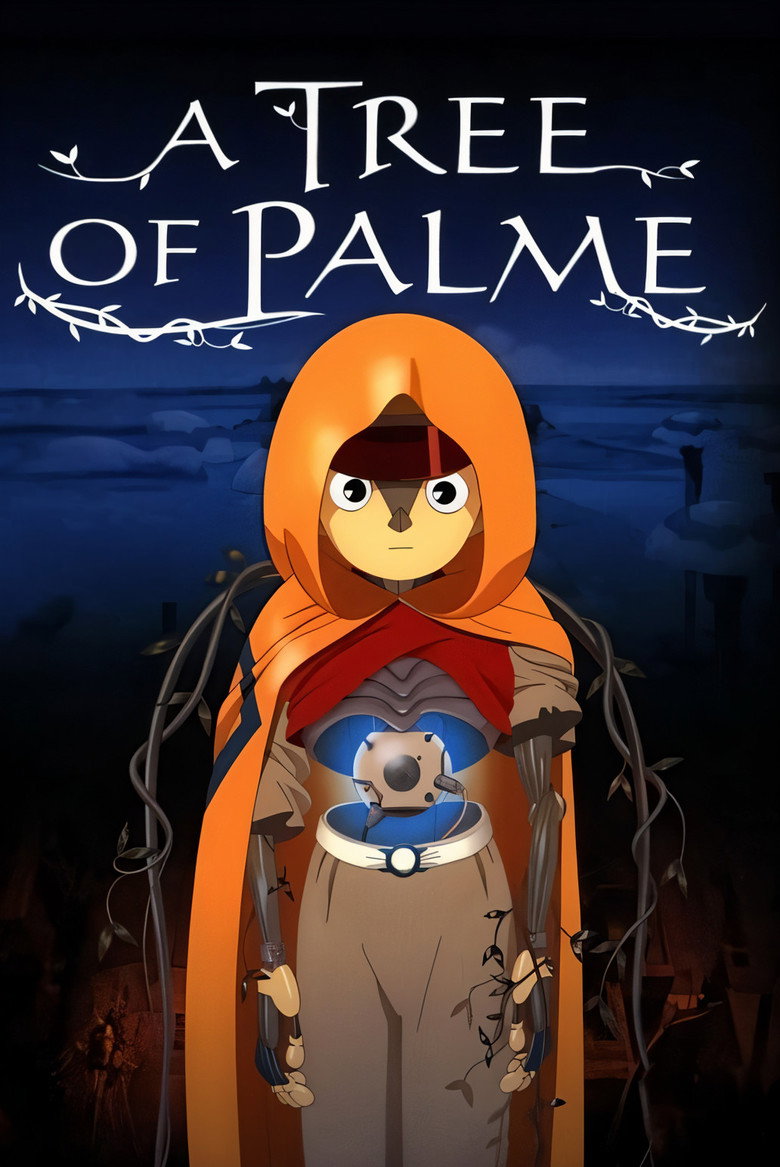
A Tree of Palme
2002
TV-14Director
Takashi Nakamura
Runtime
136 minutes
Average Rating
No ratings yetSynopsis
A Tree of Palme is an interpretation of the Pinocchio tale. It concerns a small puppet, Palme, who was tasked by his creator to look over his ailing wife, Xian. After her passing, Palme is visited by a mysterious woman who he mistakenly believes to be Xian. Shaken out of his sadness, Palme accepts her request to deliver something special to a far-off place known as Tama. This sets Palme off on a journey to discover his own emotions, and what it truly means to be human.
Where to Watch
Diversity & Representation
Overall Score
Fair
Category Breakdown
LGBTQ+ Representation
The film explores unconventional emotional bonds through a non-human protagonist. While it lacks explicit depictions of queer identities, it subverts traditional biological imperatives through its unique creator-creation dynamic.
Gender Representation
The story prioritizes emotional intelligence over traditional masculine archetypes of conquest. It centers on the agency of a puppet navigating caretaking roles and transformative female figures.
Racial & Ethnic Diversity
As a Japanese production, the film utilizes a non-Western aesthetic framework. Its fantasy setting and journey to a far-off land avoid the homogeneity of many Western classical adaptations.
Religious & Cultural Diversity
The narrative favors secular existentialism and individual perception over religious doctrine. It explores identity and grief through a postmodern lens of situational, internal experiences.
Disability Representation
Palme’s status as a puppet serves as a metaphor for ontological disability. The film treats this 'otherness' as a lens for critique rather than a deficit to be cured.
Strengths
- Subverts traditional fairy tale tropes by focusing on internal emotional discovery.
- Avoids 'inspiration porn' by treating the protagonist's non-human status as a valid lens for observation.
- Utilizes a non-Western aesthetic to provide a departure from Anglo-centric storytelling norms.
Areas for Improvement
- Lacks explicit, on-screen depictions of non-cisnormative or queer identities.
- Does not provide high-density intersectional markers within the narrative structure.
AI Analysis
A Tree of Palme offers a philosophical reimagining of the Pinocchio myth, shifting the focus from social conformity to emotional autonomy. It succeeds in deconstructing traditional fairy tale hierarchies by centering a non-human perspective. While the film lacks high-density intersectional markers or explicit identity politics, it provides a nuanced alternative to conventional storytelling. It replaces rigid moral absolutes with a subjective exploration of what it means to be human. The production's strength lies in its ability to use fantasy and non-human characters to bypass Western-centric casting and narrative norms, creating a more fluid, existential journey.
Rate this Movie
Reviews
No reviews yet. Be the first to share your thoughts on this movie!
Use the rating form above to leave a star rating and optional review.