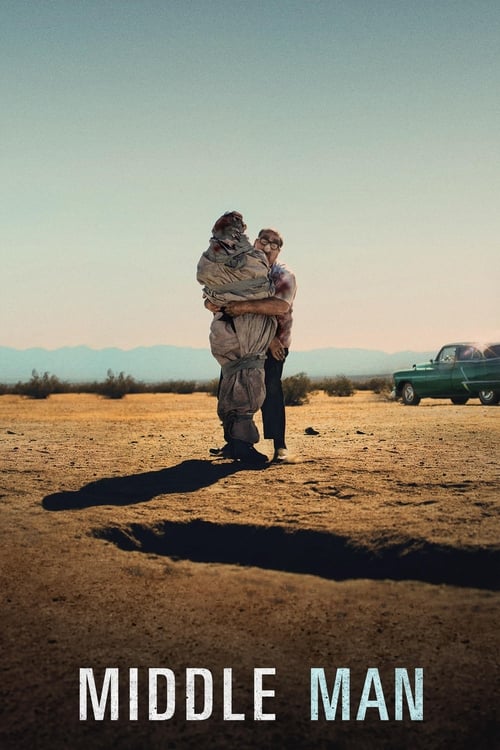
Middle Man
2017
No user ratings available yet
Representation score: 2.3 out of 10

Representation Score
Limited
2024
Director
Jack Begert
Runtime
99 minutes
Average Rating
No ratings yetNew Showbiz Analysis
The film opens on the fractured psyche of Martin Solomon, a screenwriter paralyzed by writer’s block and opioid addiction in the nighttime sprawl of Los Angeles. This image sells a vision of creative decay, where the artist is not a visionary but a hollowed-out vessel struggling to maintain basic coherence. The narrative juxtaposes Martin’s internal collapse with the chaotic, low-stakes criminality of two young drifters searching for a stolen car, creating a dual-threaded portrait of a city where ambition and survival are equally precarious. The sold meaning is a cynical deconstruction of the Hollywood dream. Martin’s interactions with industry figures reveal a world where financing is a slow-motion trap and artistic integrity is a luxury commodity. The film treats traditional markers of success—studio backing, directorial control—as illusory, positioning the "independent" path as a desperate, often futile, alternative. However, the film’s argument pulls against its own internal logic by relying on the very tropes it critiques: the incompetent male creator who needs female validation to function. The ending, implied by the chaotic convergence of the two storylines, settles on a moral verdict that rejects neat resolutions. Martin is not rewarded with a breakthrough; he remains trapped in his addiction and ego. The drifters do not secure their car; they are left with a stolen dog and a botched robbery. The camera loves the mess, finding humor in the futility of both the artist and the criminals. This is a film about the junk of aspiration, where the last image is not a triumph but a shared, stumbling survival. The hierarchy of competence is inverted: the "professional" is the least capable, while the "drifters" possess a raw, if misguided, agency. The film’s cultural critique is sharp, but its gender dynamics remain conventional, using female competence to highlight male failure without fully challenging the underlying power structures.
Category Breakdown
No queer characters or relationships appear. The social dynamics focus entirely on heterosexual professional and romantic entanglements. The cast list and synopsis contain no identity markers.
Martin Solomon is the pill-addled, insecure male protagonist whose creative block drives the plot. Jessica Klein operates as a competent, grounded professional. The film frames male fragility as the central obstacle, positioning women as stabilizing moral anchors.
The cast is predominantly white, with no non-white characters named in the credits or plot. The narrative centers on a homogeneous Los Angeles creative class. There is no on-screen exploration of racial dynamics.
The film critiques the hollow ambitions of the Hollywood industry, portraying studio financing as a deceptive trap. It treats traditional creative hierarchies with skepticism, emphasizing the instability of artistic success and the commodification of personal trauma.
Addiction is depicted as a central, debilitating condition affecting Martin’s cognition and agency. It is framed as a character flaw rather than a systemic or identity-based experience. No other physical or neurological disabilities are represented.
Present on Screen
Limited or Absent
Official Synopsis
It’s nighttime in LA: a pill-addled screenwriter struggles with writer’s block; across town, two young drifters with a lost dog search for their stolen car.
2017

2008

2017
2018

2009

2015

2006
1997
No reviews yet. Be the first to share your thoughts on this movie!
Use the rating form above to leave a star rating and optional review.