Hardcover
2008
No user ratings available yet
Representation score: 3.5 out of 10
Representation Score
Good
2008
Director
Oliver Mielke
Runtime
0 minutes
Average Rating
No ratings yetNew Showbiz Analysis
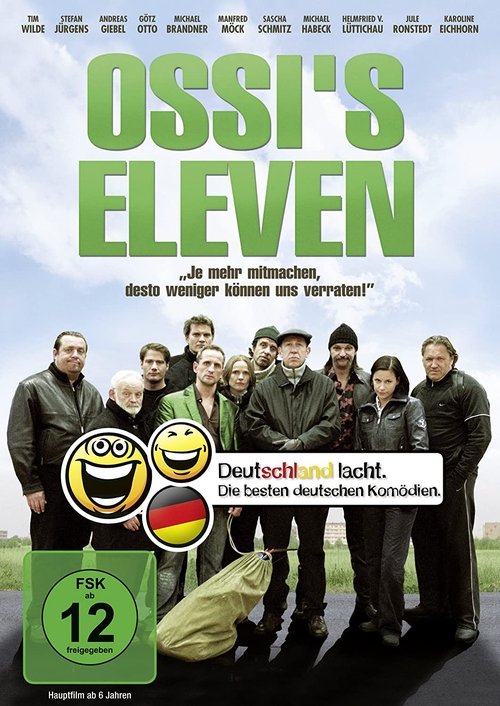
Ossi’s Eleven is a socio-political comedy that prioritizes regional identity and class struggle over demographic diversity. The narrative finds its strength in exploring the tension between historical German systems and modern capitalism. While the film provides ability to act to characters from the former East Germany, it lacks breadth in terms of racial, gender, and LGBTQ+ representation. The ensemble is defined more by political history and professional failure than by diverse identity markers. Ultimately, the film offers a specific cultural perspective that comments on those left behind by systemic shifts, compensating for its lack of traditional demographic diversity.
Category Breakdown
The film does not explicitly include LGBTQ+ characters or non-straight relationships. The narrative focuses on a heist ensemble, which seems to prioritize traditional character types.
The story centers on male characters Oswald and Karl, suggesting a male-dominated cast. While women are not mentioned in leadership roles, the plot challenges traditional masculine stereotypes through absurdity.
The plot focuses on regional German identity and post-reunification landscapes. The ensemble highlights socio-political class and historical affiliations rather than multi-ethnic representation.
The film explores themes of anti-capitalism and skepticism towards systemic institutions. It gives real power to characters from a discarded political era, such as ex-Stasi men.
There is no mention of neurodivergence or physical disabilities. The focus on doped athletes centers on physical performance rather than disability representation.
Present on Screen
Limited or Absent
Official Synopsis
Finally out again. The attempt to cheat his boss out of a truckload cost haulage driver Oswald a year of his life and his job. Now it's back home to the prefabricated building. It's just in time that Oswald's buddy Karl knows about trophies made from old D-Mark coins. In the iron foundry on the outskirts of the city, old coins worth several hundred thousand Deutschmarks are regularly stored for further processing - virtually unguarded. As the old coins can still be exchanged, this is a small but sure coup. While Karl is still laughing at Oswald's naivety, he is already beginning to put his plan into action. In a series of tragic and absurd situations, he recruits a team that couldn't be more different, from doped athletes to hated ex-Stasi men. They are united by their desire to use the money to make a difference.
2008

2018
2007
2018
2005

2014
2011

1998
No reviews yet. Be the first to share your thoughts on this movie!
Use the rating form above to leave a star rating and optional review.