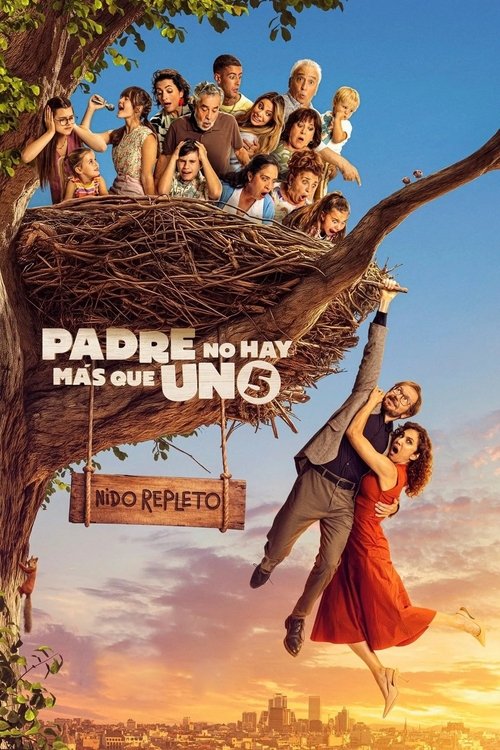
Padre no hay más que uno 5: Nido repleto
2025
No user ratings available yet
Representation score: 1.6 out of 10
Representation Score
Limited
2022
Director
Santiago Segura
Runtime
98 minutes
Average Rating
No ratings yetNew Showbiz Analysis
The film adheres to conventional domestic comedy, emphasizing established social and religious norms. It prioritizes traditional family structures and holiday customs while offering limited representation of diverse identities. While the plot allows for female characters to take significant roles in personal conflicts, the overall structure remains rooted in traditional gender roles and cultural homogeneity. The focus on religious iconography and traditional Spanish comedic formulas suggests a preference for familiarity over social disruption. Ultimately, the film caters to a populist audience by reinforcing standard cultural institutions, with little representation of underrepresented groups or non-traditional lifestyles.
Category Breakdown
The story focuses on heterosexual relationships, particularly a breakup between Sara and her boyfriend. There is no representation of non-binary gender identities or relationships that challenge traditional structures.
Female characters play significant roles in personal conflicts and relationship decisions. However, the story maintains traditional gender roles and does not challenge patriarchal norms.
The narrative follows a homogeneous domestic model typical of mainstream Spanish commercial cinema. There is no indication of multi-ethnic casting or diverse representations of identity.
The plot emphasizes Christmas traditions and religious iconography like the Nativity scene. It prioritizes traditional Western holiday customs and family cohesion over secular perspectives.
The narrative does not include any characters with visible or invisible disabilities. There is no representation of neurodivergence or physical disabilities.
Present on Screen
Limited or Absent
Official Synopsis
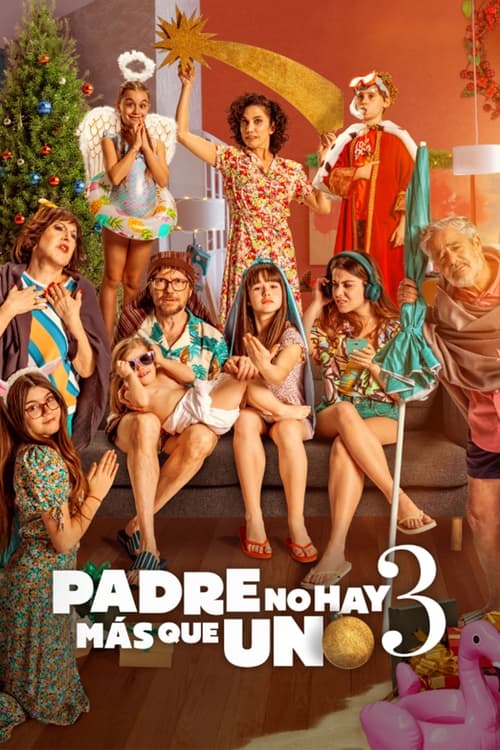
Christmas is coming. The children accidentally break a Nativity scene figurine from their father's collection and must by all means get an equal one, the problem is that it is a unique antique piece. Sara, the eldest daughter breaks up with her boyfriend, Ocho, who will try to recover her favors with the help of her father-in-law, Javier. Precisely Javier's father-in-law, Marisa's father, will be welcomed into the family home to spend the holidays after her recent separation, which will not leave Javier's mother, Milagros, indifferent. Rocío, the folklore of the family, who has been playing the Virgin for several Christmases, is relegated this year to playing the shepherdess, something that her father, Javier, is not willing to assume.
2025

2022

2023

2004
2020
2021

2020

2025
No reviews yet. Be the first to share your thoughts on this movie!
Use the rating form above to leave a star rating and optional review.