
No Contest
1995
No user ratings available yet
Diversity score: 3.8 out of 10
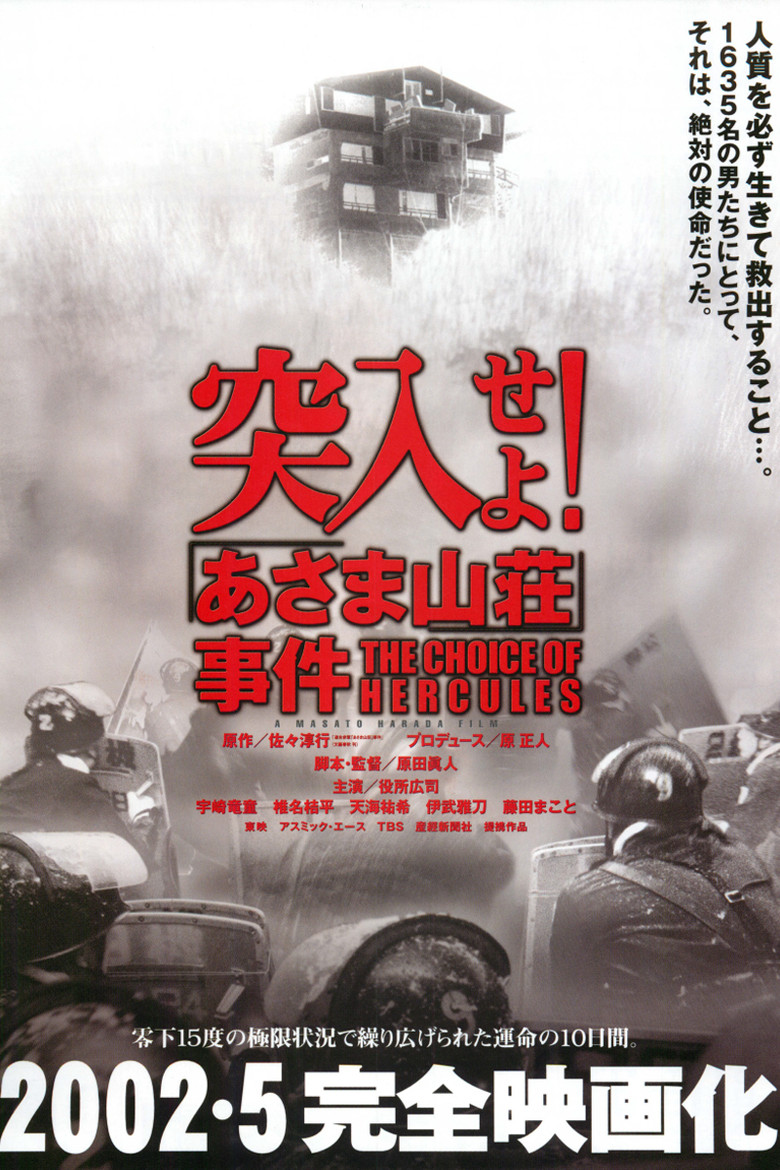
2002
Director
Masato Harada
Runtime
130 minutes
Average Rating
No ratings yetSynopsis
When radicals from Japan's Red Army took a woman hostage in the resort town of Karuizawa, Nagano in 1972, Officer Atsuyuki Sassa was put in charge of diffusing the situation. But the task had its challenges. Upon arriving in mountainous Nagano, Sassa had to compete with freezing winter temperatures, conflicting opinions between the Tokyo Metropolitan Police and the Nagano Prefectural Police, as well as public opinion to gain entrance to the lodge that held the single woman captive.
Overall Score
Fair
Category Breakdown
LGBTQ+ Representation
The film focuses on a high-stakes criminal standoff and police procedural. There is no evidence of LGBTQ+ character arcs or non-heteronormative identities within the narrative.
Gender Representation
While a female hostage drives the plot, agency remains concentrated within male-dominated police hierarchies. The film reflects traditional gendered structures of 1970s law enforcement.
Racial & Ethnic Diversity
The cast is ethnically homogeneous, reflecting a specific Japanese historical context. The narrative lacks intersectional blending of diverse ethnic identities within its primary cast.
Religious & Cultural Diversity
The film offers a sophisticated critique of institutional authority. It highlights the friction between different police departments and the chaos of radical political movements.
Disability Representation
There is no documented evidence regarding the portrayal of physical or neurodivergent disabilities in this work.
Strengths
Areas for Improvement
AI Analysis
The film serves as a historical reconstruction of a specific sociopolitical crisis in 1972 Japan. It prioritizes the tactical and geopolitical realities of the Asama Sanso incident over modern identity-driven narratives. While the film lacks demographic diversity, it succeeds in deconstructing the monolith of state authority. It explores the friction between centralized power and radical ideology through institutional conflict. Ultimately, the work is a period drama rooted in a specific domestic event, resulting in a homogeneous cast and a focus on systemic tension rather than intersectional representation.
No reviews yet. Be the first to share your thoughts on this movie!
Use the rating form above to leave a star rating and optional review.