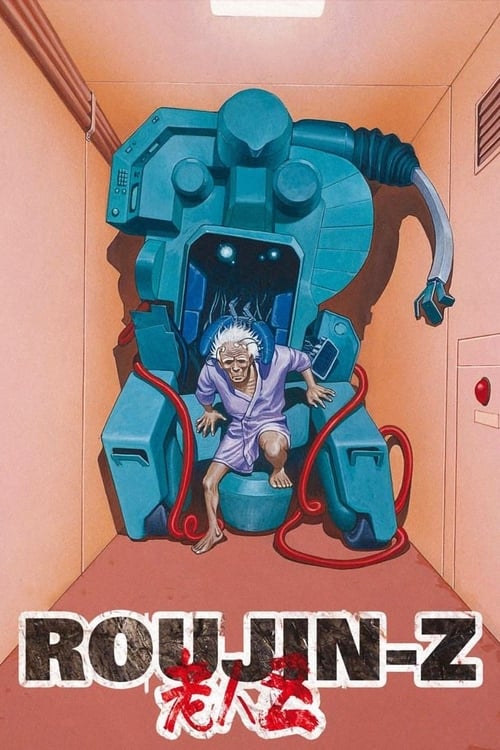
Roujin Z
1991
No user ratings available yet
Representation score: 6.3 out of 10

Representation Score
Good
2003
Director
Kanji Nakajima
Runtime
66 minutes
Average Rating
No ratings yetNew Showbiz Analysis
The film functions as a philosophical meditation on entropy and craftsmanship rather than a study of social demographics. Its narrative structure prioritizes the symbiotic relationship between a creator and his sentient machines over human-centric social structures. While the work lacks explicit representation of queer, diverse, or disabled identities, it challenges traditional Western-centric views of progress. It replaces conventional social hierarchies with a post-humanist ethics that values the lifecycle of both organic and mechanical entities. Ultimately, the film's diversity is found in its subversion of ability to act. By centering the 'will' of inanimate objects, it offers a unique, non-capitalist perspective on existence and systemic decay.
Category Breakdown
The film does not explicitly depict queer identities or romantic orientations. Instead, it focuses on the metaphysical bond between the creator and his machines, maintaining a neutral, character-minimalist approach.
The story centers on a male craftsman, following traditional archetypes of a solitary laborer. However, it distributes control between the human and the mechanical designs, disrupting typical hierarchies.
As a Japanese production, the film operates within a specific cultural context. It avoids racial conflict, focusing instead on a universalist, post-industrial landscape and the shared struggle of existence.
The narrative deconstructs anthropocentric views by framing the 'will' of machines as central. It emphasizes ecological interconnectedness and a non-traditional view of utility and existence.
Themes of physical decline and withering serve as metaphors for mortality. The film treats the frailty of the body and malfunctioning machines with dignity, avoiding common clichés.
Present on Screen
Limited or Absent
Official Synopsis
A withering craftsman caters to the requests of iron ore. He breathes life into them as he listens to their wishes. His most prominent creation, a traveling box, wanders the landscape, following railroad tracks, collecting the memories of people. In this harsh world, life is dwindling and the craftsman designs machines to assist life, even that of a tree. The craftsman is more than a creator as he helps maintain the machines. As his life dwindles, so do the lives of these machines.
1991

2022
2005
2022

2012
2013
2001
2009
No reviews yet. Be the first to share your thoughts on this movie!
Use the rating form above to leave a star rating and optional review.