
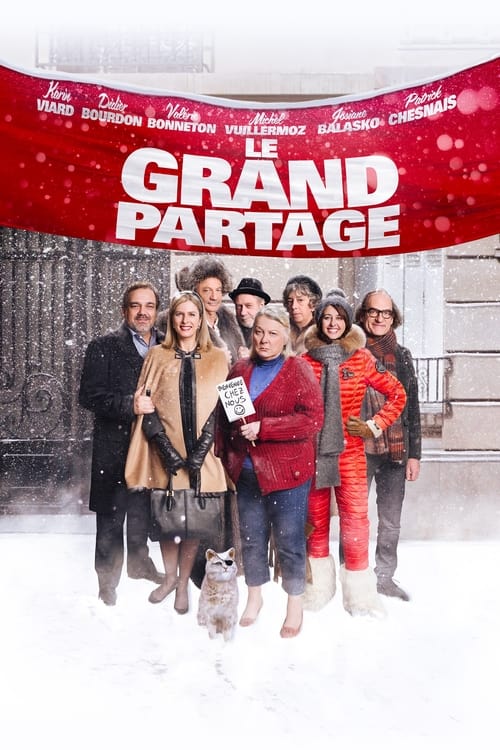
The Full House
2018
No user ratings available yet
Representation score: 3.7 out of 10
Representation Score
Fair
2015
Director
Alexandra Leclère
Runtime
102 minutes
Average Rating
No ratings yetNew Showbiz Analysis
Le grand partage focuses on social satire centered around socioeconomic stratification. The film uses a government mandate to create conflict between the rich and the poor, emphasizing a critique of class privilege over specific identity-based characters. While the narrative structure suggests a commitment to disrupting established social orders, the absence of specific data on gender, race, or sexual orientation hinders a comprehensive diversity assessment. The film excels as a commentary on social equity and the disruption of economic hierarchies, even though it remains silent on many specific demographic markers.
Category Breakdown
The film does not include any clear LGBTQ+ characters or stories. It is unclear if the comedy uses diverse identities to question the assumption that everyone is straight.
The setting provides an opportunity to challenge traditional gender roles. The tension between social classes offers a chance to explore how gender roles might shift.
The Parisian setting explores class and ethnicity. The story aims to highlight the diversity of high-income spaces.
The story questions Western institutions using an anti-capitalist framework. It highlights the tension between private ownership and class stability.
There is no information about characters with physical or neurodivergent disabilities.
Present on Screen
Limited or Absent
Official Synopsis
An unusually cold winter forces the french government to push the best housed people to accommodate some poor fellow citizens. The decree called "Le Grand Partage" creates some trouble among the residents of a Paris upscale apartment block.
2018
2015
2005

2012
2017
2021

1984
2020
No reviews yet. Be the first to share your thoughts on this movie!
Use the rating form above to leave a star rating and optional review.