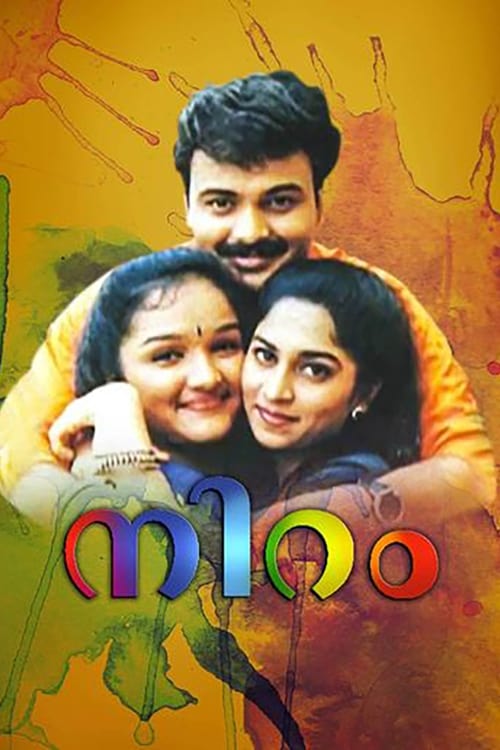
Niram
1999
No user ratings available yet
Diversity score: 3.0 out of 10

2003
Director
Kamal
Runtime
160 minutes
Average Rating
No ratings yetSynopsis
Kunjoonju, Deepu and Ashtamurthy are studying hotel management at Pondichery. Kunjoonju is a 'Kanjirappally Achayan' who is always after girls. But his 'thrill' for a girl will end the moment he finds that she is interested in him. Abbas ,the trio's friend, arranges the top floor of a house for them to stay. The house is owned by Sophy and she she stays there with her two daughters Kamala and Padma. All three guys fall for Kamala, but Kunjunju and Deepu joins together and push Ashtamurthy out of the race by making him the 'Rakhi Brother' of Kamala. Kamala knows that Kunjunju is a flirt and so she tries to keep away from him. Deepu never tells about his love to Kamala or to Kunjunju, but Ashtamurthy knows about it. Kunjunju and Deepu falls apart after a fight and Ashtamurthy brings them together. The story takes a turn, when Sophy dies and the sisters are left alone
Overall Score
Limited
Category Breakdown
LGBTQ+ Representation
The film lacks any visible representation of non-cisnormative identities or same-sex intimacy. The narrative remains strictly within heteronormative structures, centering on the male protagonists' pursuit of a female character.
Gender Representation
Agency is concentrated in the male trio, whose antics drive the comedic momentum. Female characters primarily function as objects of desire rather than independent agents disrupting traditional gender roles.
Racial & Ethnic Diversity
The cast is culturally homogeneous, reflecting its specific regional and linguistic context. While it depicts diverse student backgrounds within the Kerala diaspora, it lacks broader intersectional ethnic complexities.
Religious & Cultural Diversity
The film portrays a conventional middle-class social structure through a hostel setting. It celebrates youthful exuberance and social bonding without critiquing traditional family units or social orders.
Disability Representation
There is no discernible representation of physical, sensory, or neurodivergent disabilities. The film does not utilize disability as a narrative device or provide visibility for these identities.
Strengths
Areas for Improvement
AI Analysis
Swapnakoodu serves as a quintessential early-2000s regional comedy, prioritizing youthful camaraderie and romantic tropes over social disruption. The narrative architecture relies on established genre conventions that reinforce mainstream social structures. While the film successfully captures a specific cultural zeitgeist regarding student life and friendship, it operates within a traditional framework. It lacks the intersectional complexity required to challenge existing power dynamics or represent marginalized identities. Ultimately, the film functions as a localized social portrait. It celebrates regional identity and friendship but remains tethered to the gendered and social norms of its production era.
1999

2013

2002

2021

2012
2013
1992
2000

2015

2008
1981

2010
No reviews yet. Be the first to share your thoughts on this movie!
Use the rating form above to leave a star rating and optional review.