Chasing Tyson
2015
No user ratings available yet
Representation score: 1.4 out of 10
Representation Score
Minimal
2018
TV-GDirector
Ben Houser, Jeremy Schaap
Runtime
51 minutes
Average Rating
No ratings yetNew Showbiz Analysis
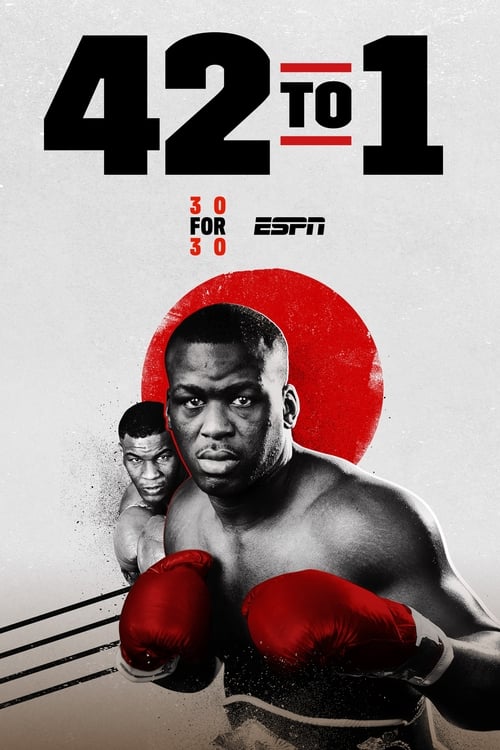
42 to 1 is a historical sports chronicle that focuses on the underdog cliché and the disruption of athletic hierarchies. It highlights the ability to act of Black athletes through the stories of James 'Buster' Douglas and Mike Tyson. However, the film operates within a traditional framework of masculine competition and does not actively engage with broader social issues such as multi-layered identity politics or queer theory. Instead, it focuses on the meritocratic and capitalistic structures of professional boxing.
Category Breakdown
The documentary focuses on the professional boxing circuit of the late 1980s and early 1990s. There is no evidence of LGBTQ+ characters or narratives addressing non-straight relationships.
The film is set in a highly masculine environment of professional heavyweight boxing. It follows traditional masculine hierarchies and does not provide much room for women to take control or challenge gendered power dynamics.
The movie centers on Black athletes in a globalized setting, highlighting the ability to act and empowerment of its Black protagonists.
The film examines the disruption of established sporting expectations through an unexpected outcome. However, the narrative stays focused on the meritocratic structures of professional sports.
The documentary does not include any characters or subjects dealing with physical, sensory, or neurodivergent disabilities.
Present on Screen
Limited or Absent
Official Synopsis
On February 11, 1990, while the odds were technically 42 to 1, it was the impossible that happened in a boxing ring in Tokyo, Japan, when James "Buster" Douglas defeated Mike Tyson for the heavyweight championship of the world. Fallen from a top-10 heavyweight contender in the mid-1980s to a stepping-stone for the champion, Douglas was lightly regarded. But a series of extraordinary circumstances would lead to an unimaginable result.
2015
2008
2020

2017

2019
2023

2015
2016
No reviews yet. Be the first to share your thoughts on this movie!
Use the rating form above to leave a star rating and optional review.