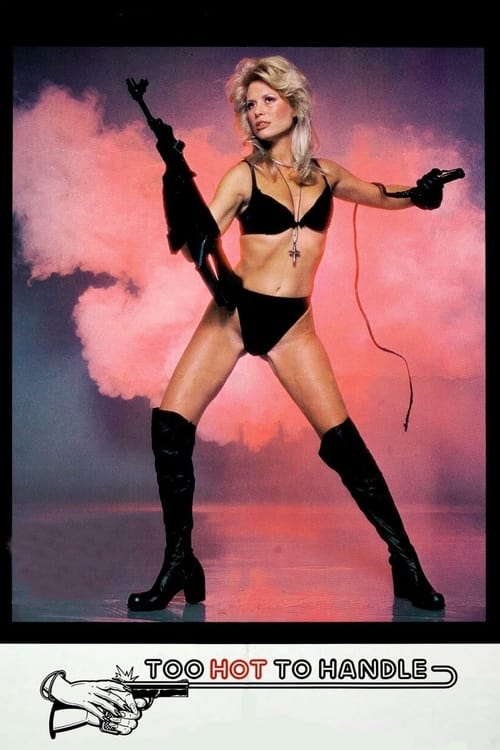
Too Hot to Handle
1977
No user ratings available yet
Representation score: 3.9 out of 10

Representation Score
Fair
1973
RDirector
Don Schain
Runtime
95 minutes
Average Rating
No ratings yetNew Showbiz Analysis
Girls Are for Loving stands out from typical 1970s exploitation films by focusing on female empowerment and interracial romance. Casting a woman as a skilled operative and an African-American man as a key protagonist moves beyond the era's standard social hierarchies. However, the film adheres to genre conventions. It explores geopolitical tensions and economic corruption but lacks explicit LGBTQ+ identity markers and disability representation. Overall, the film successfully disrupts traditional gender and racial hierarchies while operating within the broader constraints of its crime-thriller genre.
Category Breakdown
The film focuses on a rivalry between two women driven by jealousy and control. Although there is no explicit confirmation of their sexual orientation, the conflict challenges traditional male-dominated action narratives.
Ginger MacAllister defies 1970s stereotypes as a skilled CIA operative. The story emphasizes women's empowerment, placing them in positions of power and influence rather than submissive roles.
Clay Boyer, an African-American CIA agent, plays a central role. His relationship with the lead female character challenges the homogeneity of early 1970s action films.
The plot examines global capitalism and corruption through international trade agreements. It presents a cynical view of Western financial institutions and moral ambiguity around insider trading.
There is no evidence of physical or neurodivergent disability representation within the provided narrative details.
Present on Screen
Limited or Absent
Official Synopsis
Two women who like control face each other in a battle over jealousy and weaknesses. The US is about to sign a trade treaty with an Asian country; in exchange for friendly relations, the US will loan the Asians money to purchase US goods under contract. Evil siren Ronnie St. Clair tries various ways to find out which US companies will get these contracts, so that she can do some inside trading to make money on the stock market. The CIA hires gun-carrying, man-eating chanteuse and stripper, Ginger MacAllister, to put a stop to Miss St. Clair’s plan. Ginger and her CIA contact, Clay Boyer, an African-American, are attracted to each other. Will they live to ignite this spark?
1977
1974

1973
1973
1979

1973

1980

1965
No reviews yet. Be the first to share your thoughts on this movie!
Use the rating form above to leave a star rating and optional review.