Welcome the Queen!
1954
No user ratings available yet
Representation score: 1.5 out of 10
Representation Score
Minimal
1954
ApprovedRuntime
96 minutes
Average Rating
No ratings yetNew Showbiz Analysis
This documentary serves as a historical artifact of the British Empire's transition into the Commonwealth. While it provides a rich visual record of global ethnic diversity through its travelogue format, the narrative intent remains focused on reinforcing monarchical authority and Western power structures. The film's demographic variety is high, yet the power dynamics are rooted in a colonial-era framework. Non-white populations are frequently observed as passive subjects rather than active participants in the story. Ultimately, the work lacks the way different parts of someone's identity overlap. It functions primarily to validate the existing global hierarchy and the prestige of established colonial institutions through a strictly traditional lens.
Category Breakdown
The film does not depict any non-straight or non-cisgender identities. It strictly follows mid-century standards that assume everyone is straight and cisgender.
Queen Elizabeth II holds significant influence as a ruler, but visual framing often highlights her ceremonial roles. Prince Philip is shown in a supportive role, reinforcing traditional mid-century gender hierarchies.
The film showcases a wide range of Indigenous Australians, Pacific Islanders, and Asian ethnic groups. However, these populations often lack individual ability to act, appearing more as collective scenery than narrative drivers.
The film celebrates Western institutional stability and the sanctity of the Crown. It prioritizes patriotism and the cohesion of the Commonwealth over diverse cultural perspectives.
There is no representation of physical or neurodivergent disabilities within the captured footage.
Present on Screen
Limited or Absent
Official Synopsis
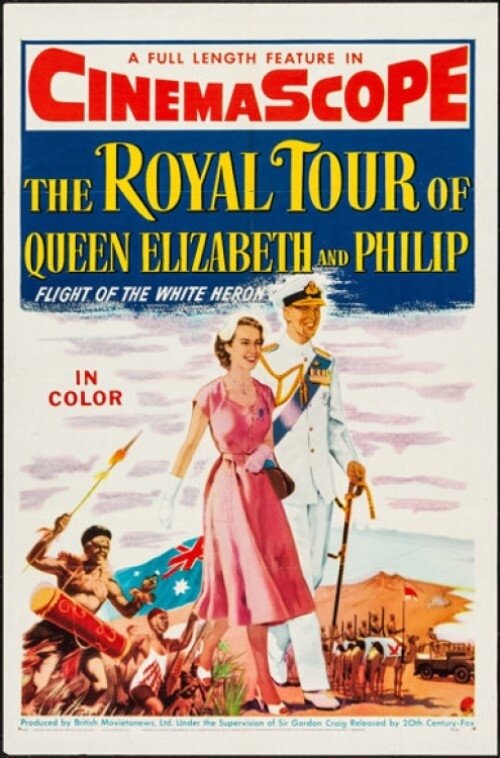
This 1954 film---50,000 Royal miles in CinemaScope and Eastman Color/Colour---covers the earlier-in-the-year six-months tour of the British Commonwealth by Queen Elizabeth and Philip, later joined by Prince Charles and Princess Anne toward the end of the trip. Those who wish can add the above four to the cast, but the thought here is they don't qualify as actors. At least, not in the normal sense. The footage includes visits to the Fiji Islands, Tongo, the Cocos Islands, Ceylon, Africa, New Zealand and Australia. Lots of native music and tribal dances and scenery inbetween many, many shots of the Royal pair arriving and departing. The title is the plot.
1954
1959
2016
2016
2018
2013
1940
2023
No reviews yet. Be the first to share your thoughts on this movie!
Use the rating form above to leave a star rating and optional review.