
Unexpected
2015
No user ratings available yet
Representation score: 3.3 out of 10
Representation Score
Good
2020
Director
Choi Ha-na
Runtime
110 minutes
Average Rating
No ratings yetNew Showbiz Analysis
More Than Family succeeds as a profound deconstruction of traditional familial structures and gendered expectations. By centering the lived experience of a transgender woman, the film disrupts standard cinematic clichés and challenges conventional social frameworks through a deeply personal lens. The film's strength lies in its ability to move beyond rigid, binary definitions of womanhood. It uses a documentary format to effectively challenge cultural norms and subvert established social orders, providing a nuanced look at identity politics. While the film excels in its exploration of gender and identity, its scope is primarily focused on internal South Korean cultural dynamics. This localized focus limits its engagement with broader multi-ethnic intersections.
Category Breakdown
The film centers its narrative around Su-jin, a transgender woman, who plays a significant role in driving the story. She is not sidelined as a mere spectacle or peripheral character but given real depth and importance.
By focusing on a non-conforming gender identity as the story's core, the film challenges traditional hierarchies. It delves into the complexities of femininity and the emotional labor of caregiving beyond simple binary definitions.
As a localized South Korean production, the film avoids a homogenized depiction of society. It highlights the tension between individual identity and the conservative ethnic and social norms of the region.
The narrative provides a sophisticated critique of traditional social institutions and the rigid expectations of the 'traditional family.' It prioritizes subjective truths over singular, traditional moralities.
There are no prominent depictions of visible or invisible disabilities that serve as central narrative drivers in this work.
Present on Screen
Limited or Absent
Official Synopsis
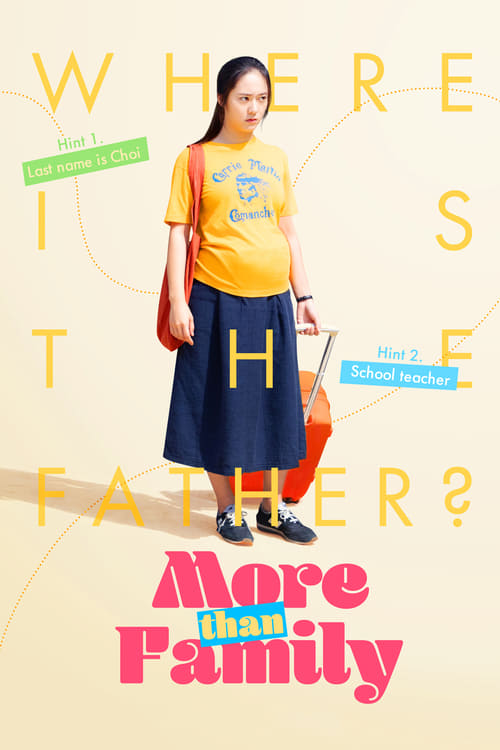
To-il tutors high school student Ho-hoon, but she soon falls in love with him and gets pregnant. The film unfolds a series of playful happenings when To-il embarks on a journey to find her birth father for the wedding, though she is living with her step-father.
2015

2018

2024

2020
2018

2005

2016

2022
No reviews yet. Be the first to share your thoughts on this movie!
Use the rating form above to leave a star rating and optional review.