Find another title
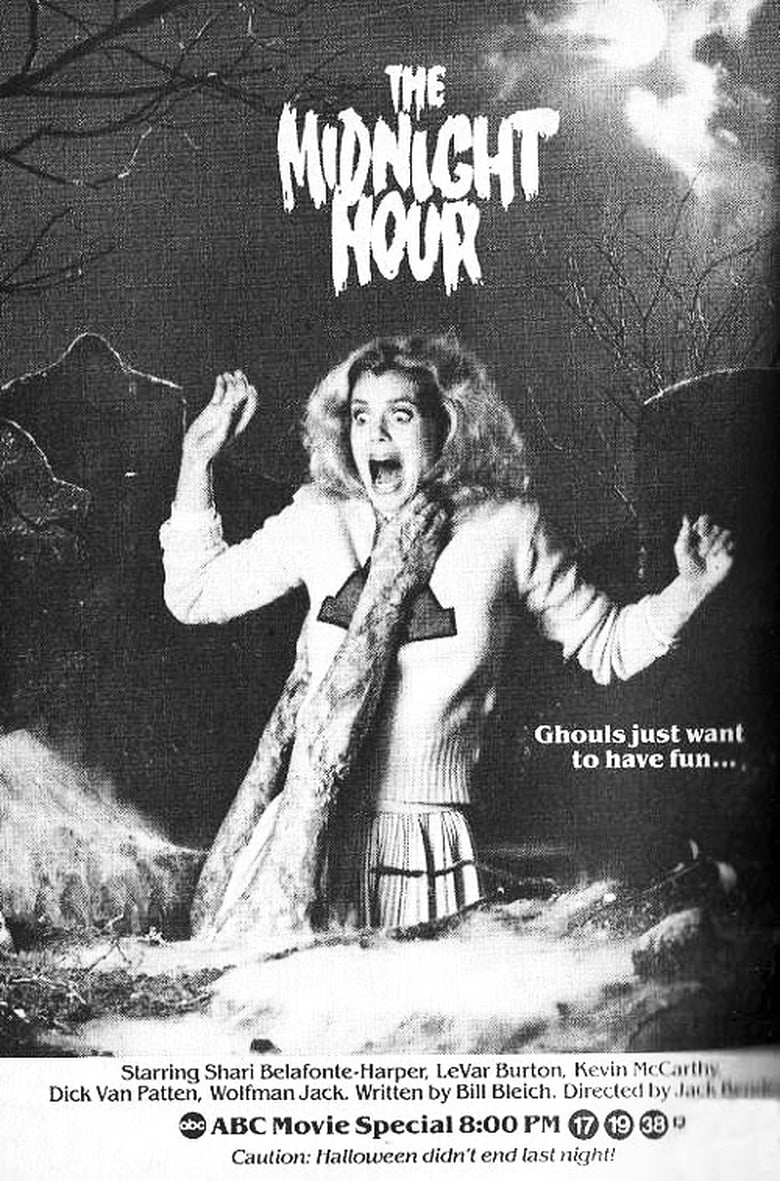
The Midnight Hour
1985
UnratedDirector
Jack Bender
Runtime
94 minutes
Average Rating
No ratings yetSynopsis
Phil, Melissa, Mitch, Mary, and Vinnie are high school friends, who unwittingly raise the dead on Halloween night. Once the dead have returned, Pitchford Cove will never be the same again....or will it?
Where to Watch
Diversity & Representation
Overall Score
Limited
Category Breakdown
LGBTQ+ Representation
The film operates within a heteronormative framework typical of 1980s teen horror. There is no evidence of non-cisnormative gender identities or same-sex intimacy.
Gender Representation
While female protagonists like Melissa and Mary are present, the film relies on standard ensemble tropes. Gender roles follow conventional archetypes without subverting established social hierarchies.
Racial & Ethnic Diversity
The ensemble appears relatively homogeneous, reflecting the demographic norms of its production period. There is no evidence of high-agency characters of color or color-blind casting.
Religious & Cultural Diversity
The story functions as a traditional supernatural comedy rather than a critique of institutions. It reinforces standard moral frameworks instead of exploring moral relativism or systemic critique.
Disability Representation
The narrative lacks a discernible focus on visible or invisible disabilities. No characters are identified as having neurodivergent traits or physical disabilities that impact the plot.
Strengths
- Includes female protagonists like Melissa and Mary within the central ensemble.
Areas for Improvement
- Lacks intersectional breadth and diverse racial representation.
- Does not feature LGBTQ+ identities or non-cisnormative gender expressions.
- Fails to engage with disability representation or neurodivergent characters.
- Relies on conventional gender archetypes rather than subverting social hierarchies.
AI Analysis
The Midnight Hour is a period-typical genre piece that prioritizes established horror-comedy tropes over progressive representation. The narrative architecture reflects the conventional social and demographic structures of mid-1980s television cinema. While the film includes female protagonists, it does not move beyond the standard archetypes of the era. The ensemble lacks intersectional breadth, appearing localized and homogeneous within the setting of Pitchford Cove. Ultimately, the film lacks the intentionality required to disrupt social hierarchies. It functions as a standard supernatural tale rather than a work that engages with systemic or cultural critiques.
Rate this Movie
Reviews
No reviews yet. Be the first to share your thoughts on this movie!
Use the rating form above to leave a star rating and optional review.