Find another title
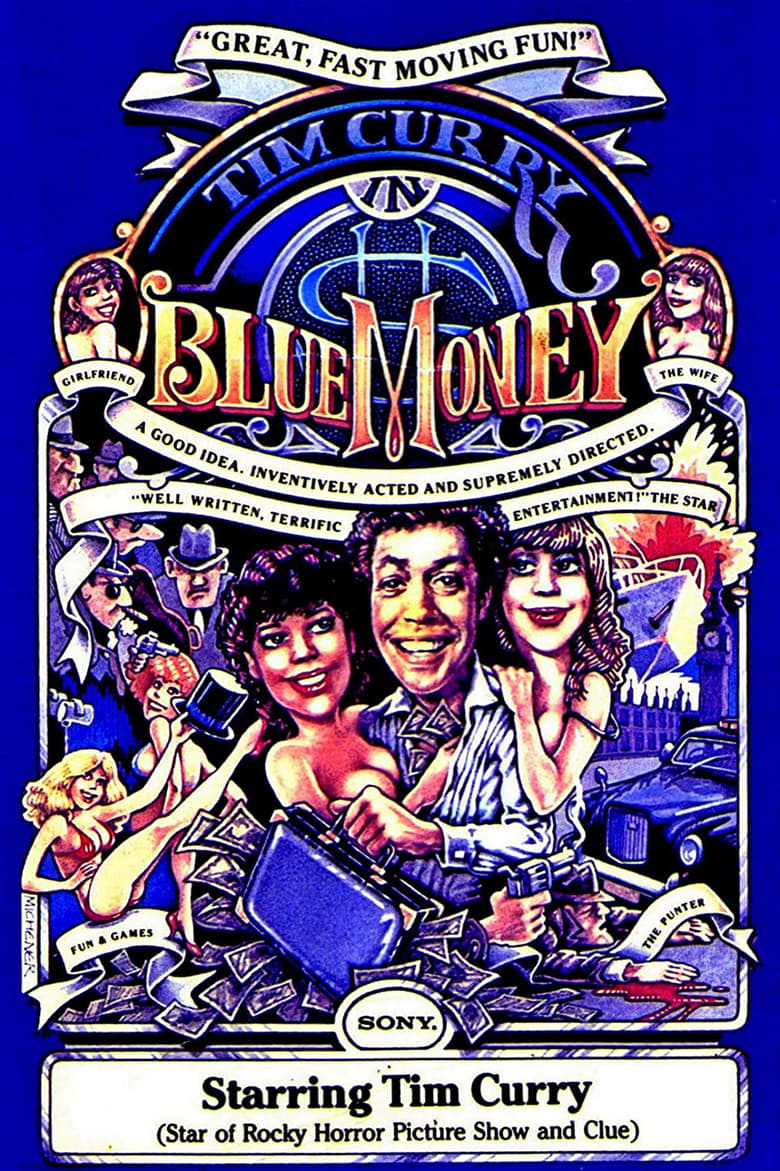
Blue Money
1985
PGDirector
Colin Bucksey
Runtime
82 minutes
Average Rating
No ratings yetSynopsis
Mobsters and the IRA chase a stagestruck London cabby (Tim Curry) who has found a briefcase full of cash.
Where to Watch
Diversity & Representation
Overall Score
Limited
Category Breakdown
LGBTQ+ Representation
Tim Curry's presence offers a connection to queer cinema history, yet his role remains a traditional comedic protagonist. The film lacks explicit depictions of non-cisnormative identities or critiques of heteronormativity.
Gender Representation
The story centers on a male-driven pursuit involving mobsters and paramilitary groups. It adheres to standard genre expectations without subverting gender hierarchies or deconstructing traditional masculinity.
Racial & Ethnic Diversity
The narrative focuses on specific European socio-political identities like London cabbies and the IRA. The cast reflects the demographic homogeneity typical of 1980s British crime comedies.
Religious & Cultural Diversity
While the film engages with political insurgency through the IRA, it functions primarily as a genre-driven comedy. It operates within the conventional moral boundaries of its era.
Disability Representation
There is no evidence of characters with visible or invisible disabilities serving as central figures. No disability-related plot devices are present in the narrative.
Strengths
- Engages with complex socio-political themes through the inclusion of the IRA and organized crime.
- Features Tim Curry, a performer with significant historical importance in queer cinema.
Areas for Improvement
- Lacks intersectional representation or the subversion of traditional gender and racial hierarchies.
- Adheres strictly to the demographic homogeneity and genre tropes of the 1980s.
AI Analysis
Blue Money is a quintessential mid-1980s crime comedy that prioritizes plot-driven momentum over social commentary. The narrative relies on established tropes, such as the 'wrong man' caught in a chase, to drive its comedic tension. The film reflects the demographic and cultural homogeneity of its time. It focuses on specific European socio-political archetypes without attempting to disrupt traditional cinematic conventions or integrate intersectional identities. Ultimately, the production functions as a standard genre piece. It lacks the intentionality required to challenge systemic power dynamics or provide meaningful representation outside of its era's established norms.
Rate this Movie
Reviews
No reviews yet. Be the first to share your thoughts on this movie!
Use the rating form above to leave a star rating and optional review.