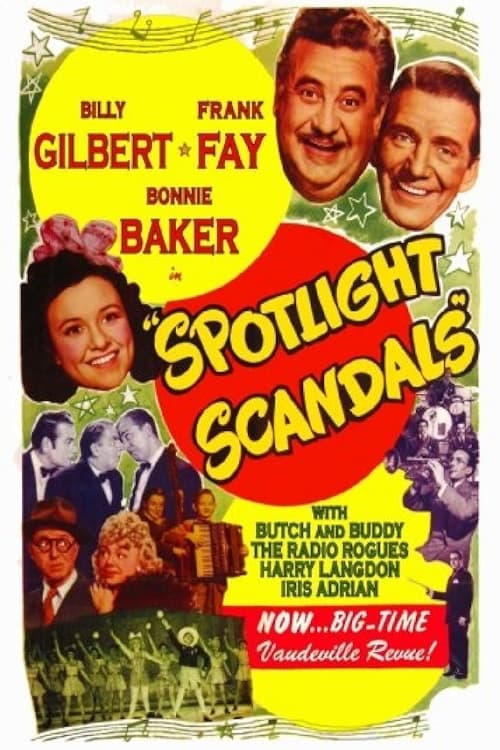
Spotlight Scandals
1943
No user ratings available yet
Representation score: 2.5 out of 10

Representation Score
Minimal
1928
PassedDirector
Paul L. Stein
Runtime
70 minutes
Average Rating
No ratings yetNew Showbiz Analysis
Show Folks is a quintessential product of the late 1920s, relying heavily on the standard clichés of the vaudeville era. The narrative prioritizes professional ambition and romantic pairings that align with the social norms of the time. The film lacks complexity in its portrayal of diverse identities, focusing instead on a homogeneous theatrical world. Character motivations are driven by conventional meritocracy and the pursuit of fame within a traditional social hierarchy. Ultimately, the work does not challenge systemic structures or offer nuanced social critiques, functioning instead as a light musical comedy centered on established archetypes.
Category Breakdown
The film centers on heterosexual relationships and traditional gender roles, without addressing non-straight identities or challenging conventional gender norms.
Rita Carey is shown as a professional performer, but her storyline is closely tied to a male character. Other characters like Cleo embody period stereotypes of women as opportunistic social actors.
The setting and cast appear predominantly white and lack diversity, with no indication of non-Anglo-Saxon characters or multicultural casting.
The story unfolds within the typical Western frameworks of capitalism and social morality, emphasizing individual professional success and traditional romantic resolutions.
There are no characters identified as having visible or invisible disabilities within the narrative.
Present on Screen
Limited or Absent
Official Synopsis
Eddie Kehoe is a young vaudeville hoofer who thinks his inability to hit the big time is the fault of stage managers, agents, musicians...everybody but himself. Eddie likes to tell others how good he is, but seldom shows them. Kitty Mayo, an old-time burlesque queen, who is with the McNary Vaudeville Company, advises Eddie to get himself a partner, as his solo abilities can only be stretched so far. He decides to follow her advice and, while in a theatrical supply shop, he sees Rita Carey rehearsing her dancing act that includes a trained duck. Eddie tells Rita he is a good friend of McNary's, and, with him as her partner, her future in show business will be secured. She agrees to join him and Eddie promptly names the act "Eddie Kehoe and Partner". Despite his conceit, Rita likes Eddie, as do others in the troupe, including Cleo a little gold-digger.
1943
1933
1938
1928
1929
1929
1933
1929
No reviews yet. Be the first to share your thoughts on this movie!
Use the rating form above to leave a star rating and optional review.