Find another title
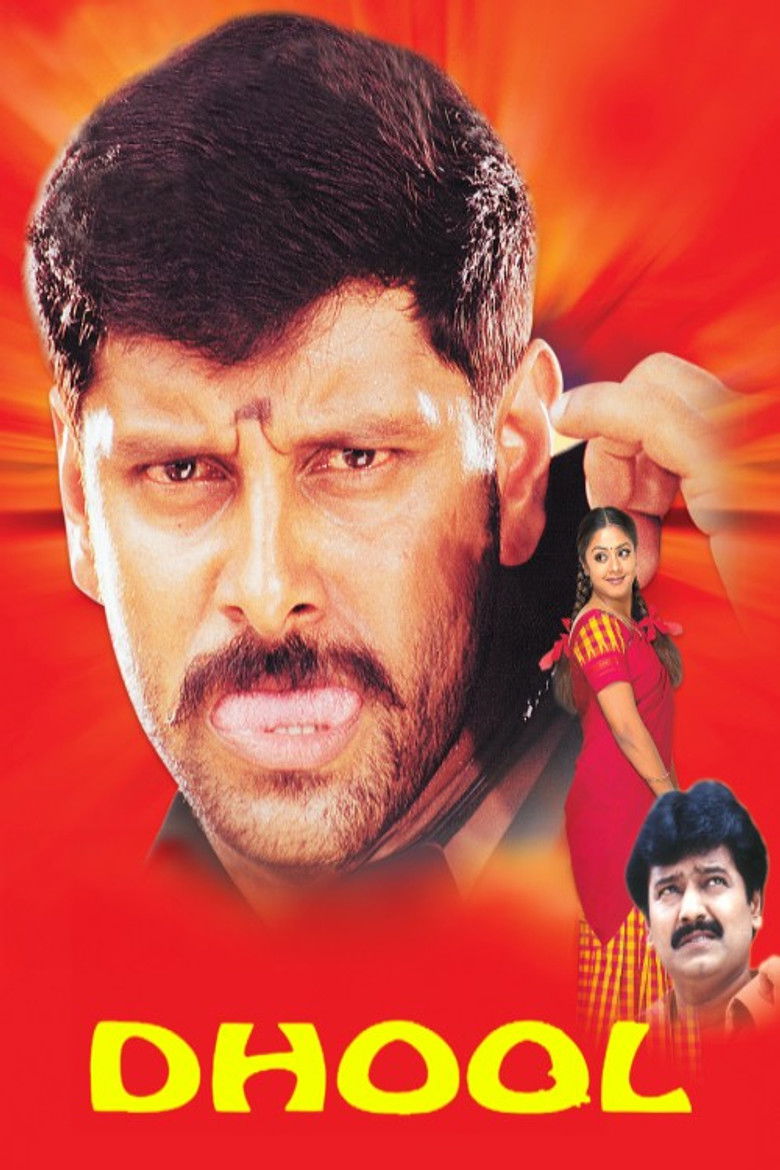
Dhool
2003
Director
Dharani
Runtime
160 minutes
Average Rating
No ratings yetSynopsis
Arumugham is an uneducated, good hearted, helpful village hick. Easwari is his childhood friend. A chemical factory in the village pollutes the local river and when all attempts to stop the factory waste from going to the drinking water falls flat, the villagers decide to send Arumugham to Chennai and meet the concerned minister who has won from their constituency. He sets out for the city with Easwari and her grandmother and they stay with Arumugham's friend and gang.
Where to Watch
Diversity & Representation
Overall Score
Fair
Category Breakdown
LGBTQ+ Representation
The film focuses entirely on heteronormative romantic structures. There is no presence of non-cisnormative identities or critiques of heteronormativity within the plot.
Gender Representation
Arumugham serves as the primary driver of action and political agency. While Easwari is central to the romance, she largely aligns with the supportive companion trope.
Racial & Ethnic Diversity
The film provides an authentic representation of South Indian ethnic and regional identities. It centers a localized, indigenous perspective without Western-centric casting.
Religious & Cultural Diversity
The narrative critiques industrial capitalism and institutional corruption. It prioritizes communal well-being over corporate expansion but remains grounded in traditional social frameworks.
Disability Representation
There is no evidence of characters with visible or invisible disabilities being utilized as central plot devices or being subjected to mockery.
Strengths
- Provides an authentic, non-Western-centric representation of South Indian regional and ethnic identities.
- Subverts class hierarchies by granting significant political agency to a marginalized, uneducated village protagonist.
- Offers a meaningful critique of industrial negligence and the impact of corporate pollution on local communities.
Areas for Improvement
- Lacks any representation of LGBTQ+ identities or non-cisnormative perspectives.
- Relies on traditional gender archetypes where the male lead drives most of the action.
- Does not engage with intersectional identity politics or more radical institutional critiques.
AI Analysis
Dhool succeeds as a narrative of localized empowerment by centering a rural, uneducated protagonist against systemic corruption. It effectively disrupts class-based hierarchies by transforming a character typically used for comedic relief into a figure of significant political influence. However, the film adheres to traditional gender archetypes and lacks engagement with intersectional identity politics or queer theory. The romantic dynamics remain strictly heteronormative, limiting the scope of its social commentary. Ultimately, the film's strength lies in its regional authenticity and its critique of environmental exploitation, providing a robust, non-Anglo-centric worldview through its focus on Tamil village life.
Rate this Movie
Reviews
No reviews yet. Be the first to share your thoughts on this movie!
Use the rating form above to leave a star rating and optional review.