Find another title
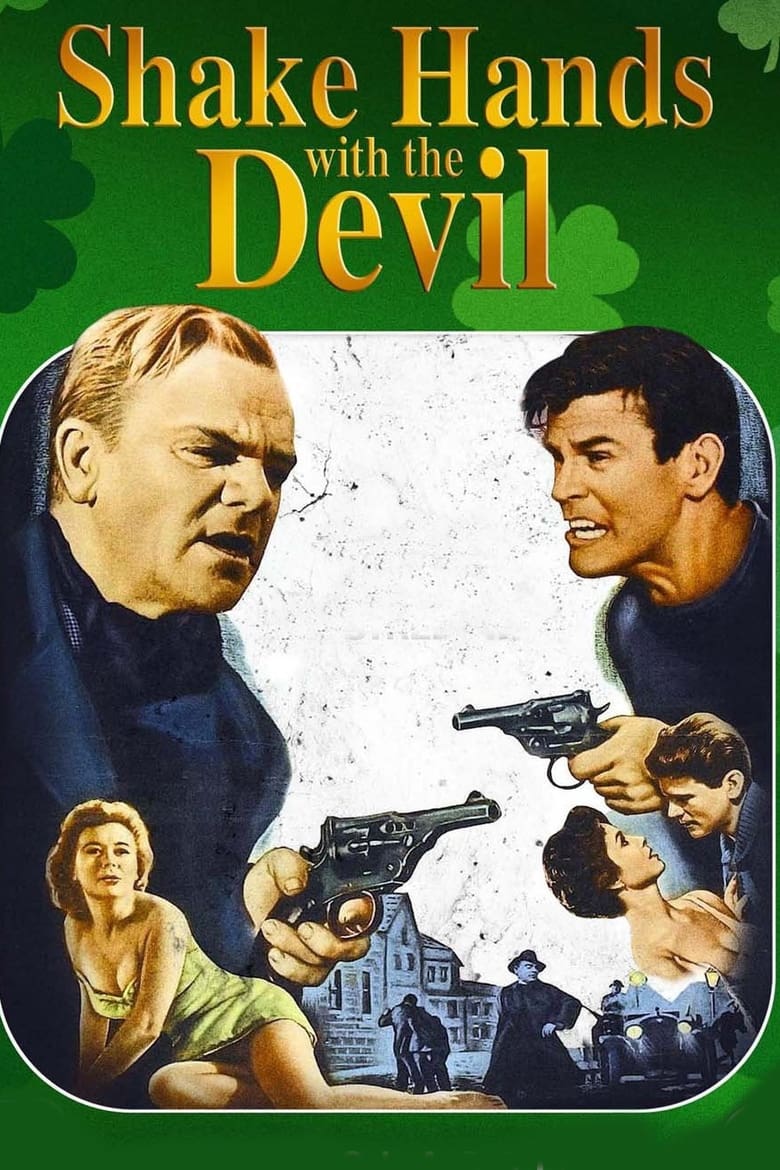
Shake Hands with the Devil
1959
NRDirector
Michael Anderson
Runtime
111 minutes
Average Rating
No ratings yetSynopsis
In 1921 Dublin, the IRA battles the "Black & Tans," special British forces given to harsh measures. Irish-American medical student Kerry O'Shea hopes to stay aloof, but saving a wounded friend gets him outlawed, and inexorably drawn into the rebel organization by his former professor Sean Lenihan, who has "shaken hands with the devil" and begun to think of fighting as an end in itself. Complications arise when Kerry falls for a beautiful English hostage, and the British offer a peace treaty that is not enough to satisfy Lenihan.
Where to Watch
Diversity & Representation
Overall Score
Limited
Category Breakdown
LGBTQ+ Representation
The film adheres to the heteronormative social structures of the 1920s and 1959 cinematic standards. No non-cisnormative identities or same-sex narratives are present.
Gender Representation
The narrative centers on male-driven political and military conflict. While an English hostage provides an emotional pivot, her agency is defined by her relationship to men and her status as a political instrument.
Racial & Ethnic Diversity
The film presents a binary conflict between Anglo-Saxon colonial forces and the Irish population. The cast remains largely homogeneous within the context of this specific historical struggle.
Religious & Cultural Diversity
The film offers a nuanced critique of the British colonial apparatus and state-sanctioned violence. It challenges singular authority by exploring the moral relativism inherent in the struggle for independence.
Disability Representation
There is no discernible focus on neurodivergence, physical disability, or chronic illness within the character development or narrative arc.
Strengths
- Provides a nuanced critique of imperialist structures and the morality of state-sanctioned violence.
- Explores the psychological descent of individuals radicalized by systemic political struggle.
- Offers a complex look at the friction between colonial authority and indigenous resistance.
Areas for Improvement
- Lacks representation of LGBTQ+ identities or non-cisnormative narratives.
- Reinforces traditional gender hierarchies, limiting female agency to emotional or political roles.
- Provides no discernible focus on disability or neurodivergence within the character arcs.
AI Analysis
Shake Hands with the Devil is a period drama that prioritizes the deconstruction of colonial authority over intersectional identity. Its primary strength lies in its critique of imperialist structures and the psychological complexities of revolutionary violence. However, the film is heavily tethered to the social hierarchies of the 1950s. It focuses on masculine archetypes of rebellion and duty, leaving little room for diverse social or identity-based perspectives. Ultimately, the work functions as a study of systemic conflict rather than a showcase for diverse representation, reflecting the traditional cinematic structures of its era.
Rate this Movie
Reviews
No reviews yet. Be the first to share your thoughts on this movie!
Use the rating form above to leave a star rating and optional review.