Find another title
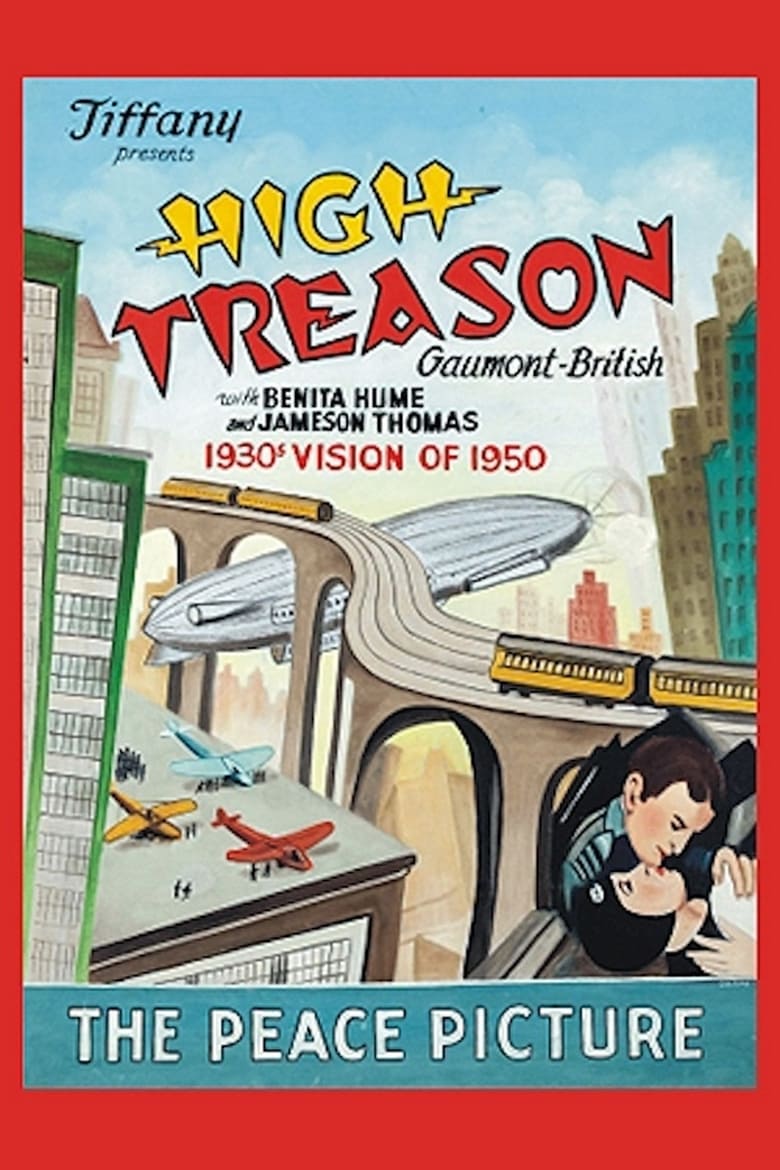
High Treason
1929
Director
Maurice Elvey
Runtime
95 minutes
Average Rating
No ratings yetSynopsis
The year is 1940 and tension is growing between the empires of United Europe and the Atlantic States. A bloody border incident puts both sides on high alert.
Where to Watch
Diversity & Representation
Overall Score
Limited
Category Breakdown
LGBTQ+ Representation
The film contains no evidence of non-cisnormative gender identities or same-sex narratives. It operates within the heteronormative social structures typical of 1929 British silent cinema.
Gender Representation
The narrative architecture likely centers on masculine authority and statecraft. There is no evidence of women driving the political coup or subverting traditional hierarchies.
Racial & Ethnic Diversity
The focus on 'United Europe' and 'Atlantic States' implies a narrative centered on Western geopolitical powers. The film likely reflects the homogeneous casting norms of the late 1920s.
Religious & Cultural Diversity
The story explores tensions between state stability and internal subversion. It functions as a traditional political drama regarding national sovereignty rather than a critique of established institutions.
Disability Representation
There is no documented evidence regarding the inclusion of characters with physical or neurodivergent disabilities.
Strengths
- The film offers a large-scale spectacle of political drama and espionage.
- It provides a window into the geopolitical tensions and genre conventions of the silent era.
Areas for Improvement
- The film lacks intersectional complexity or the subversion of social hierarchies.
- The narrative appears to reinforce traditional power structures and homogeneous casting norms.
- There is a lack of representation for non-cisnormative identities and diverse racial backgrounds.
AI Analysis
High Treason is a product of its historical moment, prioritizing the mechanics of political intrigue and geopolitical tension. The film's focus on state-level conflict and espionage reinforces traditional power structures rather than disrupting them. The narrative lacks intersectional complexity or intentional subversion of social hierarchies. By centering on the preservation of institutional order and national stability, the film adheres to the standard genre conventions of the late 1920s.
Rate this Movie
Reviews
No reviews yet. Be the first to share your thoughts on this movie!
Use the rating form above to leave a star rating and optional review.