A Family of Three
2012
No user ratings available yet
Representation score: 3.2 out of 10
Representation Score
Good
2015
Director
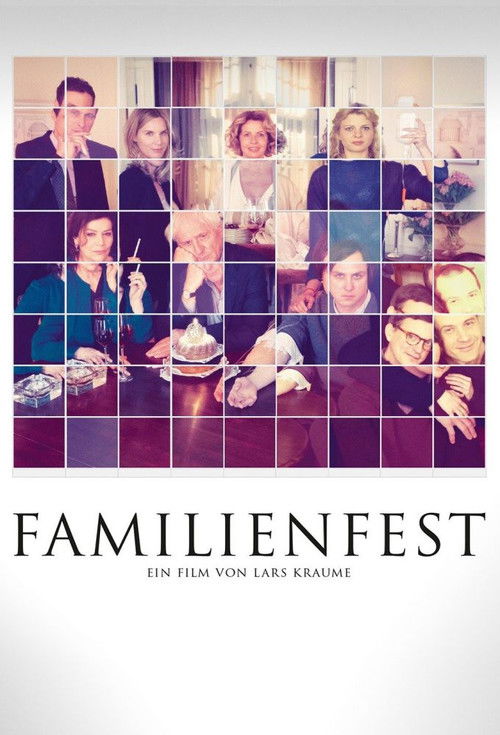
Lars Kraume
Runtime
91 minutes
Average Rating
No ratings yetNew Showbiz Analysis
Family Party serves as a psychological study of a crumbling patriarchal structure. It deconstructs the myth of the stable, idealized Western family through domestic conflict and emotional mediation. However, the film remains narrow in scope, focusing on a localized, upper-class European setting that limits racial and ethnic diversity. Ultimately, the film provides a nuanced look at social and familial expectations, though it lacks representation for disability and diverse ethnic backgrounds.
Category Breakdown
The film focuses on interpersonal tension within a family. Although specific identities are not confirmed, Max's surprising announcement disrupts traditional family structures, suggesting possible engagement with non-traditional identities.
The narrative emphasizes the emotional labor of women, Anne and Renate, as they navigate a male-dominated environment. This setup critiques traditional domestic roles and patriarchal stability.
The setting is a localized, upper-class European environment. The focus remains on intra-class and intra-family dynamics, with no indication of a multi-ethnic or non-white cast.
The story deconstructs the idealized Western family unit by presenting a milestone birthday as a site of conflict. It prioritizes psychological realism over conventional family values.
There is no evidence of characters with visible or invisible disabilities. The narrative framework does not address disability within its primary character arcs.
Present on Screen
Limited or Absent
Official Synopsis
On the 70th birthday of famous piano virtuoso Hannes Westhoff, a celebration is to take place at the patriarch's estate. For this occasion, his second wife Anne not only invited Westhoff's three sons Max, Fredrik and Gregor, but also their mother, Westhoff's ex-wife Renate. While Anne tries to maintain a friendly atmosphere, old conflicts resurface among the family. With tensions already high, things take a turn for the dramatic when son Max reveals shocking news.
2012

2008

2016

2016
2000
2008
2020
2019
No reviews yet. Be the first to share your thoughts on this movie!
Use the rating form above to leave a star rating and optional review.