
A Landing on the Sun
1994
No user ratings available yet
Representation score: 3.5 out of 10
Representation Score
Minimal
1991
Director
Gavin Millar
Runtime
103 minutes
Average Rating
No ratings yetNew Showbiz Analysis
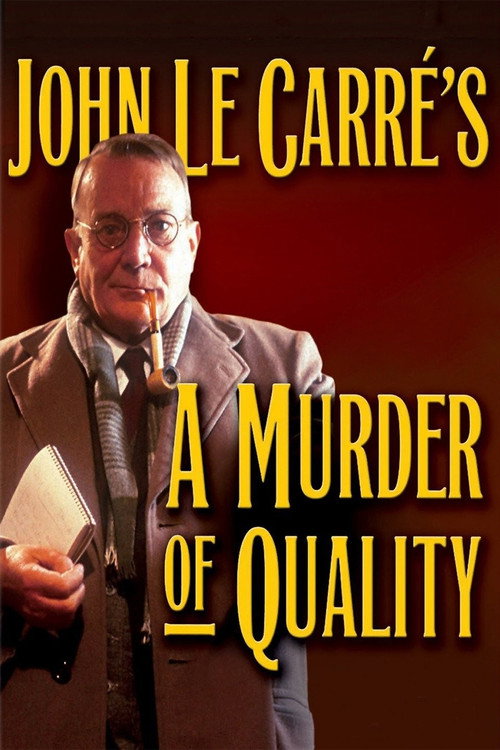
A Murder of Quality is a traditionalist period drama that prioritizes historical accuracy and genre conventions over challenging social norms. It captures the socioeconomic and racial homogeneity of mid-century Britain, focusing on the rigid class structures of a British public school. The narrative functions as a standard mystery, where characters operate within established social hierarchies. While female characters have enough ability to act to influence the investigation, the film remains grounded in the patriarchal norms of the 1950s. Ultimately, the film offers a conventional viewing experience. It lacks intentional characters who reflect more than one aspect of diversity, instead reflecting the specific institutional norms and social mores of its historical setting.
Category Breakdown
The film follows mid-century conventions that assume everyone is straight and cisgender. There are no visible same-sex relationships or non-cisgender identities in the story.
Women play key roles in driving the complexity of the mystery. They pass the Bechdel test but mostly operate within domestic spaces and a patriarchal social order.
The cast is mainly made up of actors representing a homogeneous, 1950s English population. The story centers on a white, Anglo-Saxon social structure without diverse ethnic representation.
This period piece emphasizes Western social institutions and class-based tensions. It focuses on restoring social stability rather than critiquing religion or patriotism.
There are no prominent depictions of physical or neurodivergent disabilities. Characters with disabilities do not serve as central plot drivers.
Present on Screen
Limited or Absent
Official Synopsis
At the request of his old war time colleague Ailsa Brimley, George Smiley agrees to look into the murder of Stella Rode. Brimley had only just received a letter from her saying she feared for her life at her husband's hand. The husband, Stanley Rode teaches at Carne School, but Smiley is doubtful that he had anything to do with his wife's death. As Smiley investigates, he learns that Stella was a nosy busybody who loved to learn other's little secrets and then gossip about them - or possibly blackmail them. When a student is killed and Smiley unearths a secret, he has the evidence to name the killer.Based on John Le Carré's 1962 thriller (his first) in which George Smiley is brought out of spy retirement to solve a murder in a British public school. The setting is based on Le Carre"s own schooldays in Sherborne and his brief experience teaching at Eton.
1994

1965
2013
2018
1953
2022
1978

2020
No reviews yet. Be the first to share your thoughts on this movie!
Use the rating form above to leave a star rating and optional review.