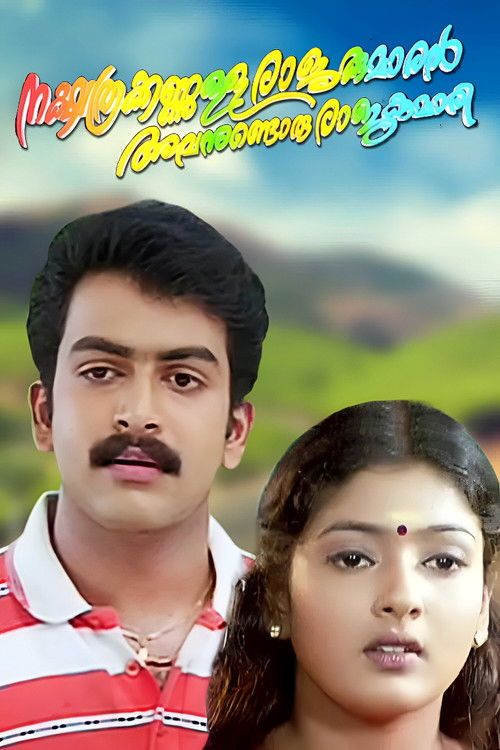
Nakshathrakkannulla Rajakumaran Avanundoru Rajakumari
2002
No user ratings available yet
Representation score: 2.8 out of 10
Representation Score
Minimal
2002
Director
Ameer
Runtime
168 minutes
Average Rating
No ratings yetNew Showbiz Analysis
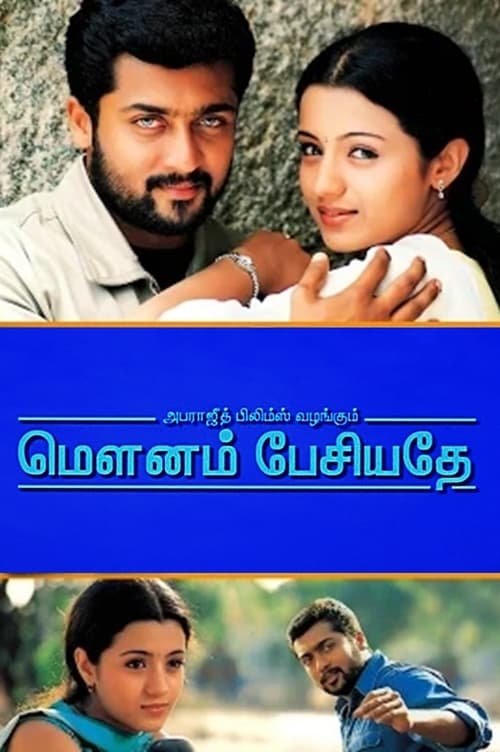
Mounam Pesiyadhe is a character-driven romantic drama that emphasizes emotional depth over social critique. The narrative focuses on the interpersonal conflicts between Gautham and Sandhya as they navigate familial expectations. While the film provides meaningful character development, it operates within the established social and cultural norms of early 2000s Tamil cinema. It reinforces traditional structures rather than challenging them. Ultimately, the film explores emotional resilience within a conventional framework, lacking the complexity found in more progressive works.
Category Breakdown
The film follows a strictly heterosexual storyline. There are no queer narratives or characters with non-binary gender identities.
Sandhya has emotional depth, but the plot is driven by traditional family structures. The film adheres to conventional gender roles and romantic clichés.
The cast reflects the South Indian setting with cultural homogeneity. It maintains an authentic local environment without harmful stereotypes.
The story centers on traditional family dynamics and middle-class lifestyles. It does not actively question religious or capitalist systems.
There is no depiction of visible or invisible disabilities. No characters are shown with disabilities as part of the narrative.
Present on Screen
Limited or Absent
Official Synopsis
Gautham, who runs a restaurant, falls in love with his friend Kannan's cousin, Sandhya. Problems arise when Gautham learns that Kannan's parents want Kannan to marry Sandhya.
2002

1989

2010

2011

2012

2010
1998

2000
No reviews yet. Be the first to share your thoughts on this movie!
Use the rating form above to leave a star rating and optional review.