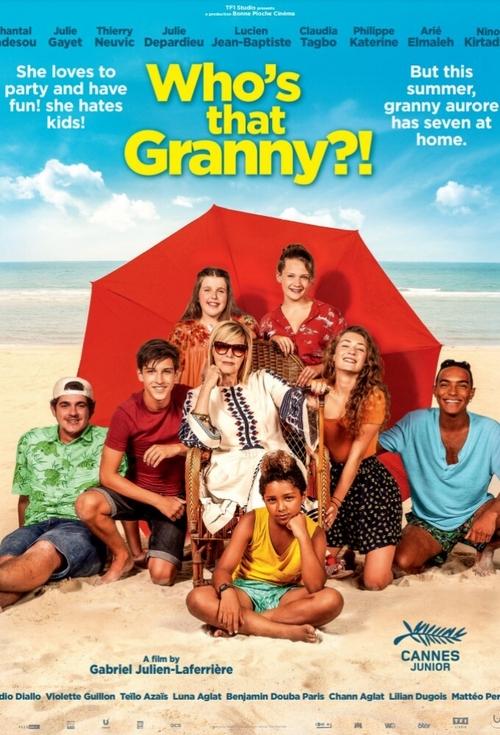
What's with This Granny?!
2019
No user ratings available yet
Representation score: 7.5 out of 10
Representation Score
Good
2016
Director
Gabriel Julien-Laferrière
Runtime
99 minutes
Average Rating
No ratings yetNew Showbiz Analysis
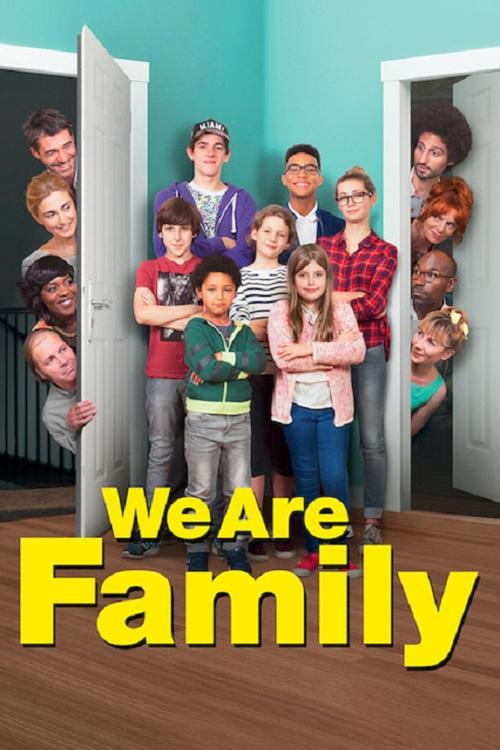
We Are Family serves as a narrative disruption of the conventional domestic hierarchy. By centering a revolution against parental rules, the film challenges the stability of traditional Western social institutions. The film's strength lies in its embrace of fluid identity models and the deconstruction of the nuclear family. It prioritizes the ability to act of the younger generation to redefine social contracts within a complex, blended network. However, the film lacks specific visibility for certain demographics. While the structure implies diversity, the absence of explicit LGBTQ+ identities or disability representation limits its overall impact in those areas.
Category Breakdown
The film explores a non-traditional family structure that deviates from typical heterosexual norms. However, specific LGBTQ+ identities are not clearly defined in the narrative.
The story challenges traditional gender hierarchies by focusing on the ability to act of children. Bastien and his siblings drive the plot, forcing adult authority figures to adapt to them.
A complex family tree involving six half-siblings and eight parents suggests a high degree of demographic blending. This implies a move away from homogeneous family structures toward multi-ethnic identities.
The film critiques the traditional Western nuclear family through its portrayal of communal, non-traditional living. The children's revolution serves as a progressive challenge to established domestic institutions.
There is no evidence within the narrative regarding the inclusion of characters with visible or invisible disabilities.
Present on Screen
Limited or Absent
Official Synopsis
Thirteen-year-old Bastien is the center of a reconstructed family: six half-brothers and sisters, eight "parents," and as many houses. His tasks within the family are far more complex than what he has to do at school. But enough's enough: the children decide to wage a revolution and turn the rules upside down. All together, they squat a large apartment and now it'll be up to the parents to come to them!
2019

2006

2010
1968
1999

2016
2019
2010
No reviews yet. Be the first to share your thoughts on this movie!
Use the rating form above to leave a star rating and optional review.