Hitler's Children
2011
No user ratings available yet
Diversity score: 4.3 out of 10
1961
Director
Alexander Kluge, Peter Schamoni
Runtime
12 minutes
Average Rating
No ratings yetSynopsis
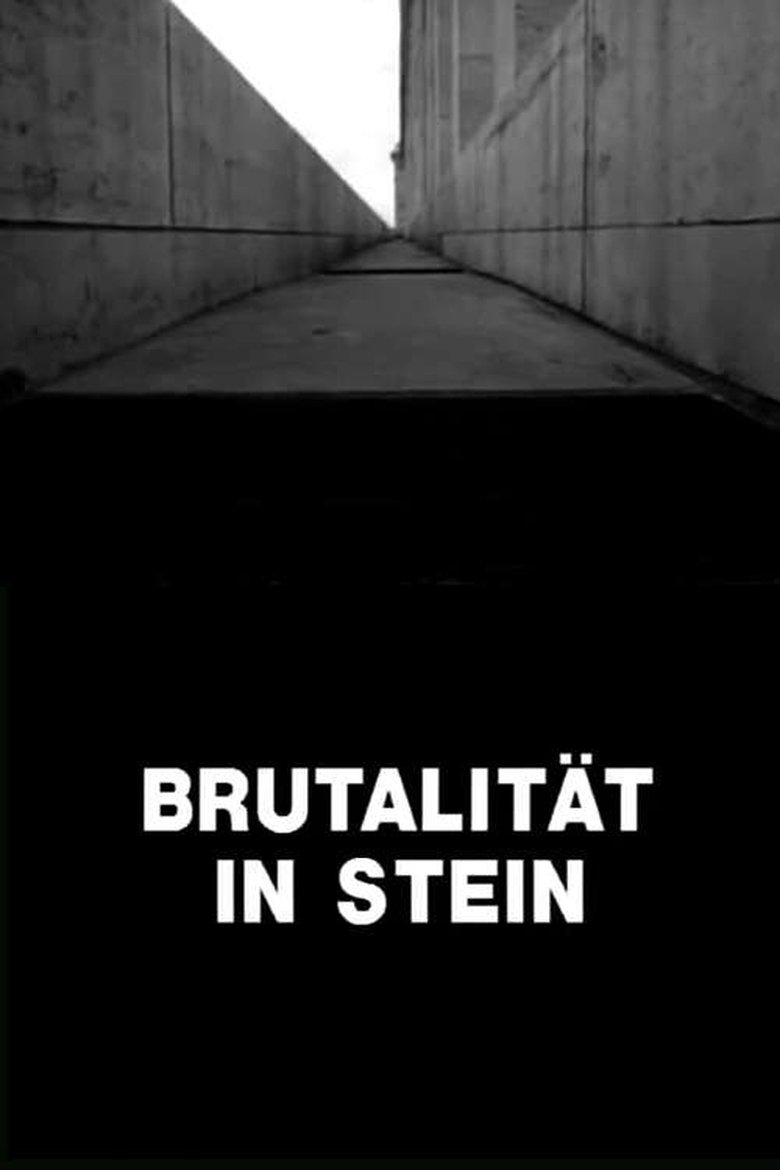
In his experimental short film "Brutalität in Stein" (Brutality in Stone), Alexander Kluge demonstrates how Nazi architecture used dimensions of inhuman and super-human scale to bolster the regime's politics of the same kind. Shots of huge neo-classical architectural structures from the Nazi period are confronted with equally anti-human national-socialist language as a voice-over.
Overall Score
Fair
Category Breakdown
LGBTQ+ Representation
The film focuses on architectural semiotics and political rhetoric. There are no LGBTQ+ characters or narratives regarding gender identity present.
Gender Representation
The film critiques the hyper-masculine, monumental aesthetic of National Socialism. It implicitly challenges aggressive masculine hierarchies by deconstructing the 'super-human' scale of Nazi architecture.
Racial & Ethnic Diversity
The subject matter involves a regime defined by racial hierarchy and white-supremacist aesthetics. While it lacks a diverse cast, the film's lens exposes the mechanics of exclusion.
Religious & Cultural Diversity
The film offers a progressive critique of traditional Western institutions and state monumentalism. It prioritizes historical truth over nationalistic sentiment or the glorification of the state.
Disability Representation
The documentary focuses on architectural and rhetorical subjects. There is no evidence regarding the portrayal of physical or neurodivergent disabilities.
Strengths
Areas for Improvement
AI Analysis
Brutality in Stone is an intellectualized critique of systemic oppression rather than a character-driven narrative. It lacks traditional demographic representation, such as LGBTQ+ characters or a diverse cast, due to its focus on structures and voice-over. However, the film excels in its cultural approach. By framing Nazi architecture as 'anti-human,' it deconstructs the myths used to bolster authoritarian power. It functions as a sophisticated tool for dismantling the ideologies of the past. Ultimately, the film's value lies in its systemic analysis. It challenges the monumental narratives of the state, prioritizing a critical historical perspective over patriotic or institutional preservation.
No reviews yet. Be the first to share your thoughts on this movie!
Use the rating form above to leave a star rating and optional review.