Find another title
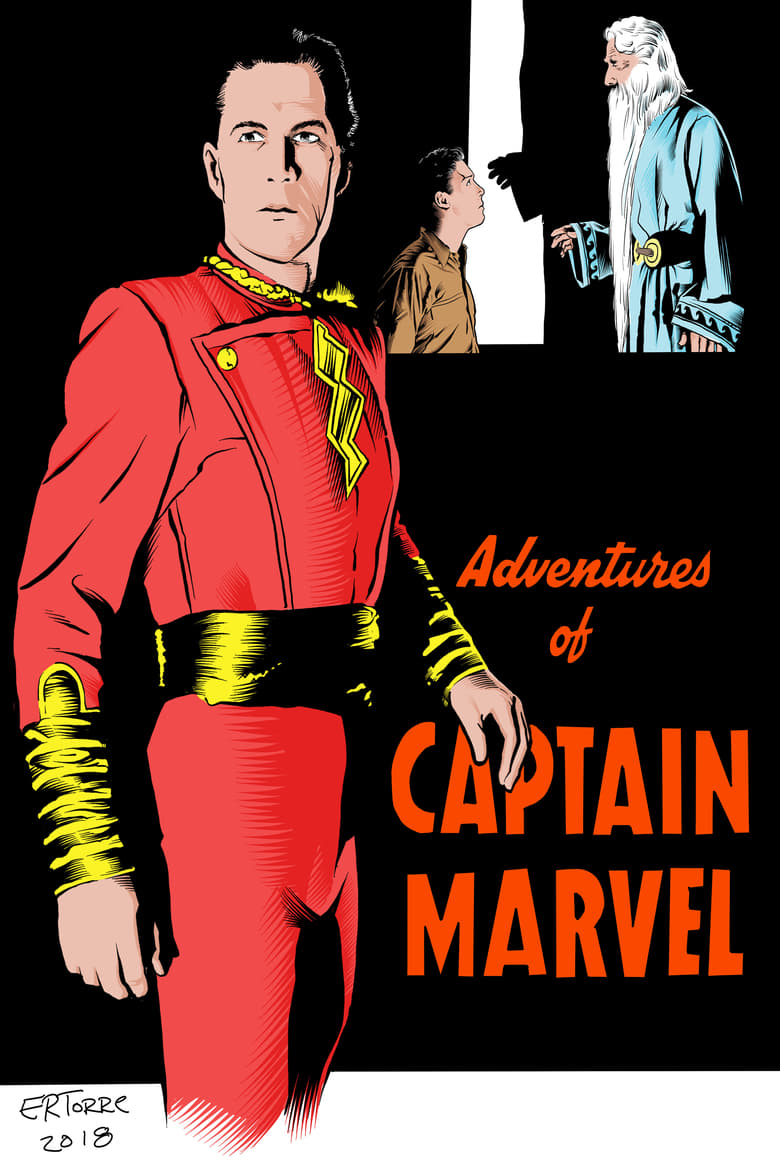
Adventures of Captain Marvel
1941
ApprovedDirector
John English, William Witney
Runtime
216 minutes
Average Rating
No ratings yetSynopsis
On a scientific expedition to Siam young Billy Batson is given the ability to change himself into the super-powered Captain Marvel by the wizard Shazam, who tells him his powers will last only as long as the Golden Scorpion idol is threatened. Finding the idol, the scientists realize it could be the most powerful weapon in the world and remove the lenses that energize it, distributing them among themselves so that no one would be able to use the idol by himself. Back in the US, Billy Batson, as Captain Marvel, wages a battle against an evil, hooded figure, the Scorpion, who hopes to accumulate all five lenses, thereby gaining control of the super-powerful weapon
Where to Watch
Diversity & Representation
Overall Score
Minimal
Category Breakdown
LGBTQ+ Representation
The serial contains no visible LGBTQ+ characters or non-heteronormative identities. It adheres strictly to the conventional heteronormative structures of the 1940s.
Gender Representation
Female characters function primarily as secondary figures and catalysts for the male protagonist. The narrative focuses on male-driven conflict and physical prowess, reinforcing traditional gender hierarchies.
Racial & Ethnic Diversity
The cast is predominantly white, reflecting the cinematic norms of the era. While set partly in Siam, the story lacks agency for non-Western characters and maintains a colonialist perspective.
Religious & Cultural Diversity
The work operates within a framework of traditional Western morality and anti-Axis sentiment. It champions the preservation of societal norms rather than critiquing Western institutions.
Disability Representation
There are no significant depictions of physical or neurodivergent disabilities. Characters are defined by physical capability, with no disability-related narratives integrated into the plot.
Strengths
- Features strong anti-Axis sentiment through the targeting of Nazi archetypes.
Areas for Improvement
- Lacks representation of LGBTQ+ identities or non-heteronormative characters.
- Female characters lack independent agency and serve mostly as plot catalysts.
- The narrative maintains a colonialist perspective regarding its Southeast Asian setting.
- There is a complete absence of characters with physical or neurodivergent disabilities.
AI Analysis
This 1941 serial functions as a traditional morality play, emphasizing clear-cut binaries of justice and villainy. The narrative architecture prioritizes a centralized, heroic masculine identity, leaving little room for intersectional complexity. The storytelling reinforces the social status quo of its era. It relies on Western-centric perspectives and traditional hierarchies, offering a narrow demographic breadth that lacks modern progressive representation. Ultimately, the work serves as a reinforcement of early 20th-century genre tropes rather than a disruption of them.
Rate this Movie
Reviews
No reviews yet. Be the first to share your thoughts on this movie!
Use the rating form above to leave a star rating and optional review.