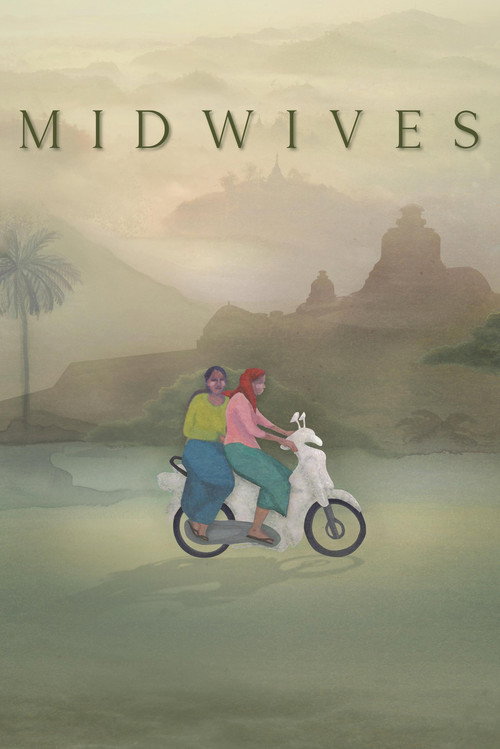
Midwives
2022
No user ratings available yet
Representation score: 4.8 out of 10

Representation Score
Good
2025
Director
Najiba Noori
Runtime
84 minutes
Average Rating
No ratings yetNew Showbiz Analysis
The film opens with the jarring contrast of a Parisian landing and the memory of Kabul’s fall, framing Hawa’s life as a series of displacements. Najiba Noori’s camera treats her mother’s forced marriage at thirteen and her secret longing for a cousin not as tragedies to be mourned, but as the foundational texture of a woman who is now choosing her own path. The sold meaning is one of quiet, domestic resilience: Hawa’s desire to learn to write and start an embroidery business is presented as a radical act of self-reclamation. The camera lingers on the whiteboard and the fabric, symbols of a future that is hers to define, rather than the past that was imposed on her. However, the film’s argument pulls against its own framing of independence. Hawa’s new business is inextricably linked to her daughter’s labor and her husband’s care, meaning her "emancipation" is still tethered to traditional familial duties. The father’s dementia is a constant, nagging presence that limits Hawa’s freedom, yet the film does not critique the structure that leaves her as the sole caregiver. The last image is not a triumphant declaration of freedom, but a tentative step into a bazaar, suggesting that independence is a process rather than a destination. The film’s power lies in its refusal to romanticize Hawa’s past or her present, instead offering a clear-eyed view of a woman navigating the narrow spaces between tradition, trauma, and the possibility of a self-made life.
Category Breakdown
Hawa’s past romance with a male cousin is the sole romantic context. No same-sex relationships or queer identities appear. The film centers heterosexual family bonds.
Hawa’s forced marriage at 13 and secret longing define her identity. She plans a 50-50 embroidery business with her daughter. Her literacy journey uses a whiteboard and books to claim agency.
The Hazara ethnic identity is explicitly named. The family’s displacement from Kabul to Paris drives the narrative. This background frames their ongoing struggle for safety.
The film depicts daily life and family dynamics in Afghanistan. It highlights the arduous improvement of women’s status. Geopolitical violence is contextualized through dialogue rather than visual spectacle.
The father’s dementia is treated as a logistical burden. It limits Hawa’s freedom as the sole caregiver. No deeper exploration of caregiving systems occurs.
Present on Screen
Limited or Absent
Official Synopsis
Afghan documentary maker Najiba Noori offers not only a loving and intimate portrait of her mother Hawa, but also shows in detail how the arduous improvement of the position of women is undone by geopolitical violence. The film follows the fortunes of Noori’s family, who belong to the Hazaras, an ethnic group that has suffered greatly from discrimination and persecution.
2022
2023
2024
2016
2022
2004
2021
2019
No reviews yet. Be the first to share your thoughts on this movie!
Use the rating form above to leave a star rating and optional review.