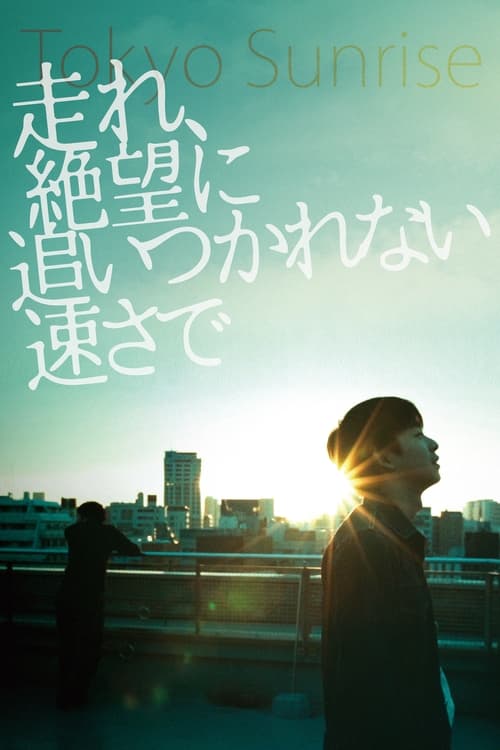
Tokyo Sunrise
2015
No user ratings available yet
Representation score: 4.1 out of 10

Representation Score
Fair
2017
Director
Natsuki Seta
Runtime
118 minutes
Average Rating
No ratings yetNew Showbiz Analysis
Parks delves into the complexities of legacy and memory through a female-led investigation. By centering the plot on a search for a non-traditional past, the film disrupts standard familial clichés and emphasizes female curiosity. While the film avoids traditional patriarchal leadership, it lacks explicit evidence of high-level multi-layered complexity. The narrative structure favors character-driven movement over broad social representation. Ultimately, the film presents a nuanced view of personal history, even if it remains within a relatively homogeneous social framework.
Category Breakdown
The plot revolves around a search for a woman who was the ex-girlfriend of a male character's father, introducing a non-straight relationship into the family narrative. However, the exact nature of their relationship remains unspecified.
Women play key roles in driving the story, with Jun and Haru taking the lead as primary investigators. Male characters primarily serve as subjects of the search rather than central drivers of the plot.
Set within a Japanese social context, the film focuses on interpersonal and generational connections. It does not include multi-ethnic casting or significant diversity in its narrative.
The use of an open-reel tape to reconstruct a deceased person's identity highlights a focus on subjective memory. This approach offers a nuanced view of family and social continuity.
The narrative does not address characters dealing with physical, neurodivergent, or mental health conditions.
Present on Screen
Limited or Absent
Official Synopsis
Jun is a university student. She meets high school student Haru. Haru is looking for Sachiko, the ex-girlfriend of her now deceased father. Jun and Haru meet Tokio. Tokio is the grandson of Sachiko and they learn that Sachiko is now deceased. They find an open-reel tape from Sachiko's articles.
2015

1998
2013

2009
2020

2024
1972

2016
No reviews yet. Be the first to share your thoughts on this movie!
Use the rating form above to leave a star rating and optional review.