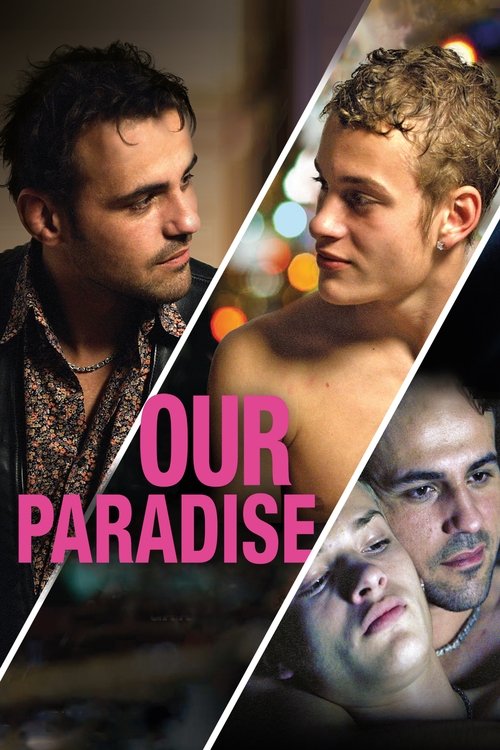
Our Paradise
2011
No user ratings available yet
Diversity score: 7.6 out of 10
2004
UnratedDirector
Gaël Morel
Runtime
86 minutes
Average Rating
No ratings yetSynopsis
Annecy is no tourist destination for three working-class Algerian brothers and their father, in the months after their mother has died. Marc is deeply troubled: he tries to stiff drug dealers and then plots revenge. Christophe is released from jail, lands a job, and must overcome various temptations in order to keep it. Olivier, nearing 18, may be falling in love with Hicham...
Overall Score
Good
Category Breakdown
LGBTQ+ Representation
The film explores queer identity through Olivier, whose attraction to Hicham introduces non-heteronormative desire. This adds intersectional complexity to a traditional patriarchal family structure without relying on standard coming-out tropes.
Gender Representation
The narrative focuses heavily on masculine struggle and the volatility of male identity. While the absence of a matriarch limits female presence, the film deconstructs traditional provider myths through portrayals of vulnerability.
Racial & Ethnic Diversity
The film centers an Algerian diaspora family, offering a nuanced portrait of North African identity. It avoids immigrant clichés by prioritizing individual agency and internal family dynamics over mere ethnic symbolism.
Religious & Cultural Diversity
The story challenges Western social hierarchies by depicting survival within the drug trade and legal systems. It presents a non-idealized domestic life shaped by systemic pressure and moral relativism.
Disability Representation
There is no significant evidence regarding the portrayal of physical or neurodivergent disabilities within the narrative.
Strengths
Areas for Improvement
AI Analysis
The film succeeds by centering the lived experiences of an Algerian immigrant family, moving beyond tokenism to explore complex intersectional identities. By focusing on the internal friction of a working-class household, it avoids the reductive tropes often found in mainstream immigrant stories. However, the narrative is heavily weighted toward masculine perspectives. While this serves the film's exploration of patriarchal pressure, it results in a lack of female representation following the death of the mother. Ultimately, the work provides a sophisticated critique of socio-economic displacement. It balances ethnic identity with queer subtext to create a gritty, realistic portrait of life on the periphery of society.
No reviews yet. Be the first to share your thoughts on this movie!
Use the rating form above to leave a star rating and optional review.