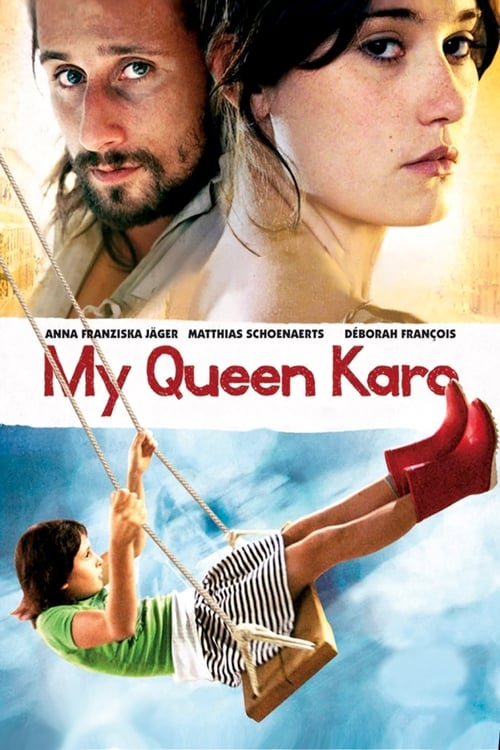
My Queen Karo
2009
No user ratings available yet
Representation score: 6.0 out of 10

Representation Score
Limited
2022
Director
Christopher Roth
Runtime
116 minutes
Average Rating
No ratings yetNew Showbiz Analysis
The film stands out for its critique of traditional Western social structures, replacing the nuclear family with a communal living arrangement. However, it lacks specific details about racial and ethnic diversity, as well as representation of characters with disabilities or neurodivergence. While there are hints at queer themes, these remain undefined.
Category Breakdown
The film includes a romantic relationship between Jeanne and Jean, which may hint at queer themes but does not explicitly define their identities or relationship.
Jeanne, a female protagonist, plays a significant role in driving the story. The commune setting suggests a social structure that moves beyond traditional patriarchal families.
There is no information available regarding the racial or ethnic composition of the commune or the cast. The specific demographic makeup of the characters remains unstated.
The film critiques the traditional nuclear family by focusing on a commune where children grow up without parents, emphasizing communal living over biological kinship and Western values.
The narrative does not address characters with physical disabilities, neurodivergence, or mental health conditions.
Present on Screen
Limited or Absent
Official Synopsis
Fourteen-year-old Jeanne has lived in a farm commune since she was two years old. Her mother and father live in city communes and rarely visit. This is one of the commandments given by Otto, who rules the commune: children are to grow up without parents. Knowing nothing else, Jeanne enjoys her outdoor life, surrounded by lots of other children, until she falls in love with 16-year-old Jean and her childhood paradise begins to fall apart.
2009

2014

2019

2008

2000

2023

2012

2024
No reviews yet. Be the first to share your thoughts on this movie!
Use the rating form above to leave a star rating and optional review.