Find another title
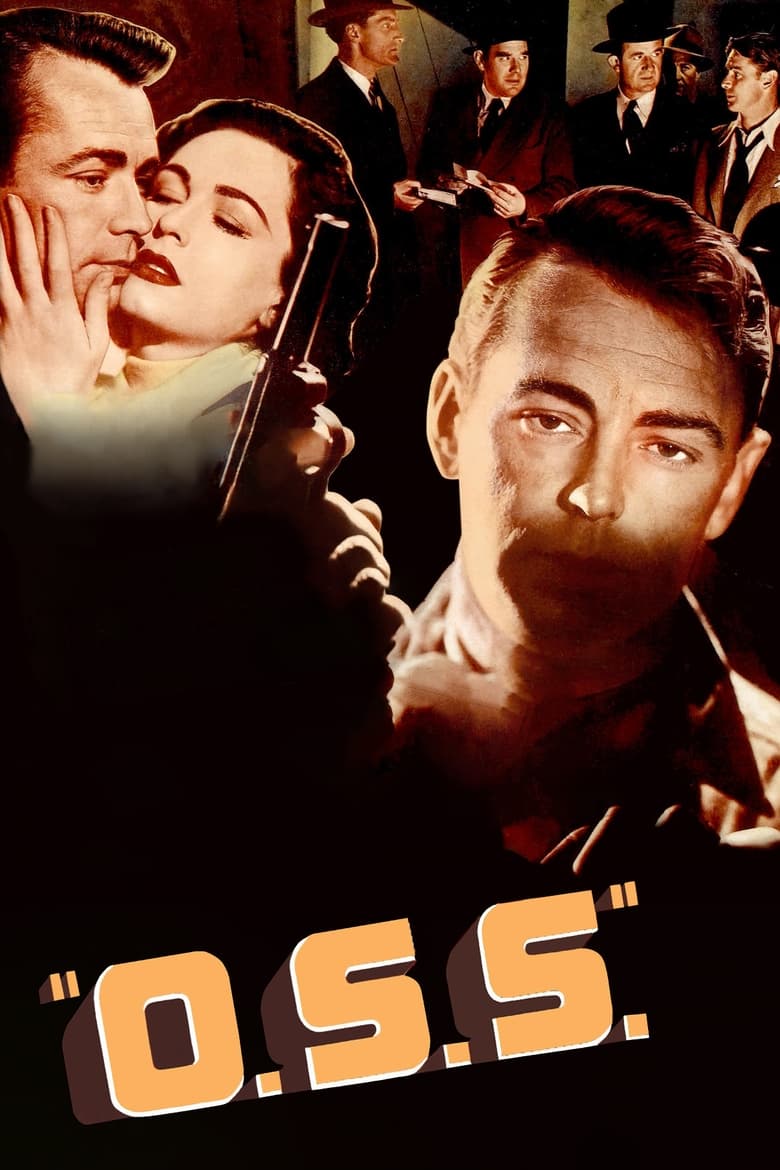
O.S.S.
1946
NRDirector
Irving Pichel
Runtime
107 minutes
Average Rating
No ratings yetSynopsis
The (O)ffice of (S)trategic (S)ervices' Cmdr. Brady (Patric Knowles) forms Operation "Applejack" (based on a composite of actual incidents during WWII) and sends Lt. (j.g.) Philip Masson, U.S.N.R. aka John Martin as spy Philippe Martine (Alan Ladd) along with Miss Ellen Rogers posing as her college roommate, Madame Elaine Duprez (Geraldine Fitzgerald) and Robert Bouchet, Tech Sgt., A.U.S. as Albert Bernardito (Richard Benedict) to acquire secret Nazi plans. After nearly getting caught they succeed and get new identities. However they discover a secret that could change the war and risk their lives to get the information back to London before it jeopardizes their lives.
Where to Watch
Diversity & Representation
Overall Score
Limited
Category Breakdown
LGBTQ+ Representation
The film adheres to strict 1940s heteronormative structures. There is no presence of non-cisnormative identities or same-sex intimacy.
Gender Representation
Female characters like Ellen Rogers are integral to the mission but remain tethered to male-led objectives. The narrative reinforces hierarchies where men drive tactical decisions.
Racial & Ethnic Diversity
The cast is overwhelmingly homogeneous and primarily Anglo-Saxon. The story lacks significant racial or ethnic blending, reflecting standard Western wartime productions of the era.
Religious & Cultural Diversity
The film emphasizes patriotism and the legitimacy of Western intelligence institutions. It promotes a clear-cut distinction between Allied duty and the antagonist's threat.
Disability Representation
Characters are portrayed as able-bodied operatives. There are no prominent depictions of visible or invisible disabilities within the narrative.
Strengths
- Features female characters who serve essential, active roles within the espionage mission.
- Provides a clear, focused narrative centered on wartime duty and institutional objectives.
Areas for Improvement
- Lacks racial and ethnic diversity, presenting an overwhelmingly homogeneous cast.
- Reinforces traditional gender hierarchies where male characters drive the primary tactical decisions.
- Provides no representation of LGBTQ+ identities or non-cisnormative gender expressions.
AI Analysis
O.S.S. is a quintessential mid-century wartime procedural that prioritizes institutional loyalty and genre conventions. The film functions as a standard espionage thriller, focusing on the tactical success of a Western intelligence apparatus during World War II. While the narrative includes female operatives, their agency is secondary to the male protagonists. The production reflects the era's social norms, presenting a unified, non-diverse front that avoids intersectional complexity or social subversion. Ultimately, the film reinforces existing social and gender hierarchies rather than challenging them, serving as a functional but traditional example of 1940s studio cinema.
Rate this Movie
Reviews
No reviews yet. Be the first to share your thoughts on this movie!
Use the rating form above to leave a star rating and optional review.