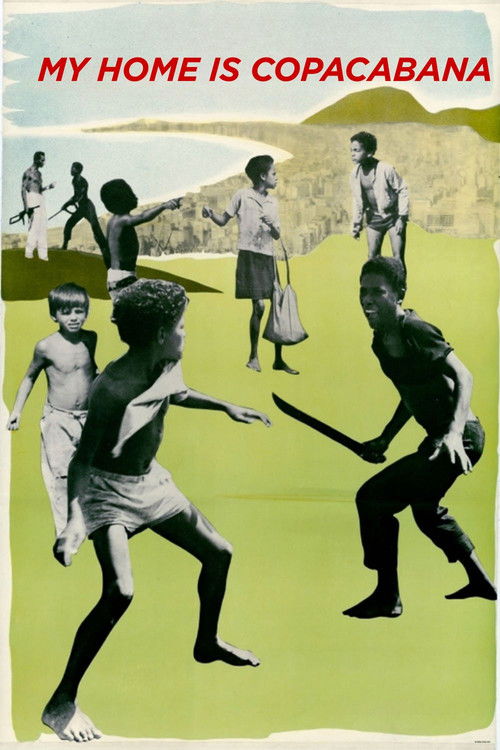
My Home Is Copacabana
1965
No user ratings available yet
Representation score: 8.0 out of 10

Representation Score
Fair
2011
Director
Cecília Amado
Runtime
96 minutes
Average Rating
No ratings yetNew Showbiz Analysis
Cecília Amado’s film is a powerful exercise in social realism that centers the lived experiences of Afro-Brazilian street children. It succeeds by using the specific racial and cultural landscape of 1950s Bahia to drive its narrative, avoiding including someone from a minority group without giving them real depth in favor of authentic representation. However, the film operates within a narrow social scope. The focus on a male-dominated gang limits gender diversity, and the absence of LGBTQ+ identities or characters with specific disabilities leaves certain demographic areas unaddressed. Ultimately, the work's strength lies in its systemic critique. It elevates the role of underrepresented youth by refusing to romanticize the state or traditional family structures, providing a gritty look at survival on the margins.
Category Breakdown
The story focuses on the male-centric bonds of a street gang and does not include any LGBTQ+ romantic arcs or non-assuming gender matches what was assigned at birth identities.
The social structure is heavily male-dominated, with women appearing mainly as peripheral maternal figures or anchors to traditional domesticity.
The film casts a predominantly Black and mixed-race ensemble, reflecting the authentic cultural landscape of Bahia and centering Afro-Brazilian youth as the main characters.
The story critiques traditional Western institutions and idealized nuclear families, favoring a situational, survival-based morality.
The film does not feature characters with specific disabilities but instead explores the pervasive 'disability' of poverty and lack of basic physical security.
Present on Screen
Limited or Absent
Official Synopsis
About the life and adventures of a gang of abandoned street kids known as "Capitães da Areia" (Captains of the Sands), in Salvador, Bahia, during the 1950s.
1965

2008

2012

2006
1972

2014

2011
2012
No reviews yet. Be the first to share your thoughts on this movie!
Use the rating form above to leave a star rating and optional review.