Find another title
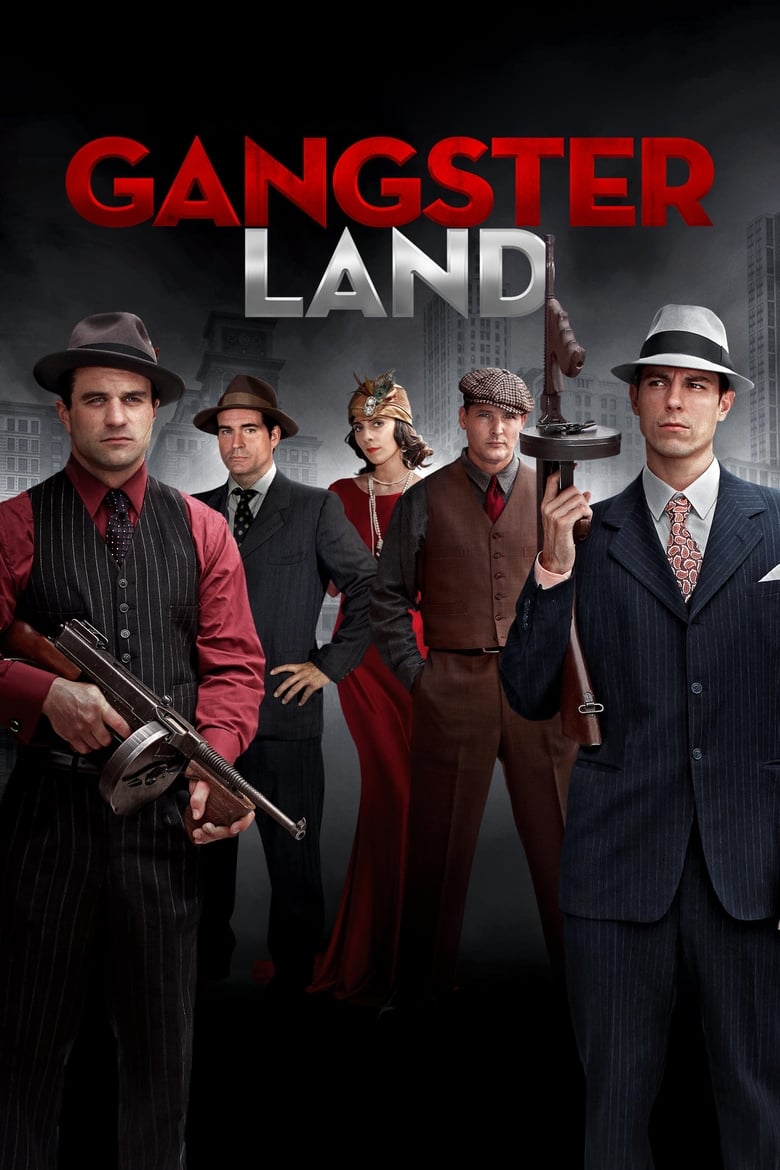
Gangster Land
2017
Not RatedDirector
Timothy Woodward Jr.
Runtime
90 minutes
Average Rating
No ratings yetSynopsis
The story of America's most famous mobsters and their rise to power. Examine Al Capone's ascension through the eyes of his second in command, “Machine Gun” Jack McGurn.
Where to Watch
Diversity & Representation
Overall Score
Limited
Category Breakdown
LGBTQ+ Representation
The film lacks any discernible presence of LGBTQ+ characters or narratives. The social landscape is strictly heteronormative, reflecting the historical constraints of the early 20th century.
Gender Representation
The narrative centers on male-dominated power structures. Women are relegated to secondary roles as domestic partners or victims, reinforcing traditional hierarchies without exercising significant agency.
Racial & Ethnic Diversity
The cast is predominantly white, focusing on Italian-American and Irish-American experiences. While historically accurate to these specific syndicates, the film lacks intersectional breadth or non-white characters with high agency.
Religious & Cultural Diversity
The film portrays the pursuit of the American Dream through illicit means rather than critiquing Western institutions. It depicts authority as ineffective to serve the genre's focus on lawlessness.
Disability Representation
There is no evidence of characters with visible or invisible disabilities being utilized as central narrative drivers or being portrayed with agency.
Strengths
- Accurately reflects the ethnic compositions of specific historical Italian and Irish-American crime syndicates.
Areas for Improvement
- Lack of female agency or characters who subvert patriarchal leadership.
- Absence of LGBTQ+ representation or non-cisnormative identities.
- Minimal inclusion of characters with disabilities or diverse racial backgrounds.
- Failure to provide intersectional breadth beyond the primary historical focus.
AI Analysis
Gangster Land functions as a traditionalist biographical anthology that prioritizes historical genre conventions over progressive narrative structures. The film adheres to the masculine-coded hierarchies of the Prohibition era, focusing on the rise of figures like Al Capone and Jack McGurn. Because the work seeks to dramatize historical biography rather than deconstruct social norms, it maintains a very low diversity profile. The storytelling emphasizes the established social hierarchies and ethnic homogeneity characteristic of early 20th-century organized crime syndicates. Ultimately, the film offers a conventional portrayal of historical power dynamics. It does not attempt to introduce intersectional perspectives or challenge the status quo, opting instead for a standard crime drama framework.
Rate this Movie
Reviews
No reviews yet. Be the first to share your thoughts on this movie!
Use the rating form above to leave a star rating and optional review.