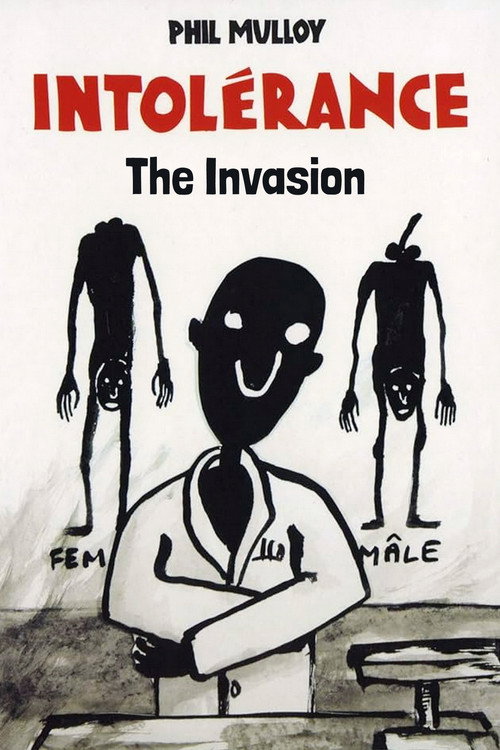
Intolerance II: The Invasion
2001
No user ratings available yet
Diversity score: 5.8 out of 10

2007
Director
Phil Mulloy
Runtime
24 minutes
Average Rating
No ratings yetSynopsis
Two thousand years into the future, the battlefleet from Earth is still searching for the Planet Zog. Those on board are irreconcilably divided between those that believe the Planet Zog exists, and those that don't. Caught between these warring factions Ade and Eva Hokum are determined to find happiness with each other. Will the Planet Zog be a paradise for them?
Overall Score
Good
Category Breakdown
LGBTQ+ Representation
The film centers on the relationship between Ade and Eva Hokum. Their pursuit of happiness amidst systemic conflict suggests a focus on personal connection over rigid social adherence.
Gender Representation
Ade and Eva are positioned with significant agency. They prioritize self-determined fulfillment over the traditional hierarchies found within the warring battlefleet factions.
Racial & Ethnic Diversity
Specific racial or ethnic markers are not established in this speculative setting. The narrative focuses on ideological divisions rather than ethnic categorization.
Religious & Cultural Diversity
The story critiques organized dogma through the lens of irreconcilably divided factions. The search for Planet Zog serves as a metaphor for finding meaning outside traditionalist systems.
Disability Representation
There is no specific evidence regarding the depiction of physical or neurodivergent characters within the provided narrative context.
Strengths
Areas for Improvement
AI Analysis
Phil Mulloy’s work uses a surrealist, satirical lens to explore the tension between dogmatic belief systems and individual agency. The film succeeds by centering a personal narrative of connection against a backdrop of institutional dysfunction. While the speculative setting obscures specific demographic markers like race or disability, the film's thematic architecture is progressive. It favors subjective truth and individual autonomy over the rigid, warring structures of the battlefleet. Ultimately, the film functions as a critique of organized collective structures, using its science fiction premise to highlight the human desire for stability amidst ideological fragmentation.
No reviews yet. Be the first to share your thoughts on this movie!
Use the rating form above to leave a star rating and optional review.