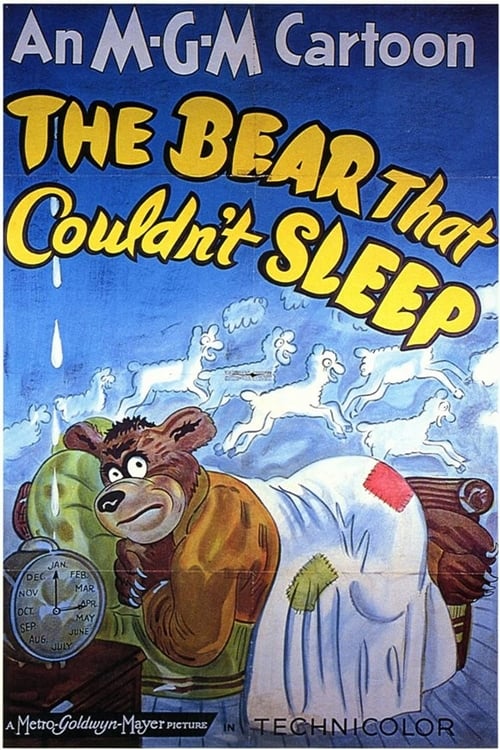
The Bear That Couldn't Sleep
1939
No user ratings available yet
Representation score: 0.3 out of 10

Representation Score
Minimal
1938
ApprovedDirector
William Hanna
Runtime
9 minutes
Average Rating
No ratings yetNew Showbiz Analysis
Blue Monday opens on a man wrestling with an alarm clock, a visual metaphor for the friction between industrial time and domestic labor. The film’s argument is simple: the Captain is ill-equipped for housekeeping, and his struggles with a vacuum, sink, and dishes are the punchline. This is a standard 1930s domestic comedy where male incompetence is the joke, but the camera does not linger on the structural implications. Mama’s brief dismissal—"do it yourself"—sets the terms, yet the narrative quickly returns to the Captain’s physical mishaps, treating his failure as a temporary inconvenience rather than a critique of gender roles. The sold meaning is that domestic labor is a source of comic chaos for the man, while the woman’s authority is a background fact. The film does not challenge the traditional hierarchy; it reinforces it by making the man’s struggle the spectacle. The last image, presumably the Captain still without buttons, leaves the status quo intact. There is no inversion of the default, no subversion of the era’s norms. The film is a period piece that reflects its time, not a commentary on it. The camera loves the Captain’s flailing, but it does not love the idea that he should be doing the work. The ending is a return to the beginning, with the domestic order unchanged.
Category Breakdown
No queer markers appear. The cartoon relies on heterosexual spousal dynamics. Sexual orientation is unaddressed in this domestic setting.
The Captain’s incompetence drives the comedy. Mama dismisses him with one line. His failure serves as comic relief, not structural critique.
Characters are white anthropomorphs. No racial or ethnic diversity is depicted. Visual design implies a homogeneous cast.
The film reinforces 1930s domestic norms. The home is a site of male failure. Traditional family structures remain unmarked defaults.
No disabilities are displayed. Physical comedy focuses on clumsiness. Impairment or accessibility is not addressed in the narrative.
Present on Screen
Limited or Absent
Official Synopsis
The Captain, after much wrestling with his alarm clock, finally wakes up to discover there's no buttons (for suspenders) on his ding-busted pants. He chews out Mama; she tells him if he doesn't like the housekeeping, he can do it himself, and storms out. What follows is pretty much the usual bunch of man-keeping-house jokes: a voracious vacuum, an overflowing sink, crashing dishes, and a dozen crises at once. And still no buttons on the pants.
1939

1938
1948
1953

1938

1954
1948

1941
No reviews yet. Be the first to share your thoughts on this movie!
Use the rating form above to leave a star rating and optional review.