Find another title
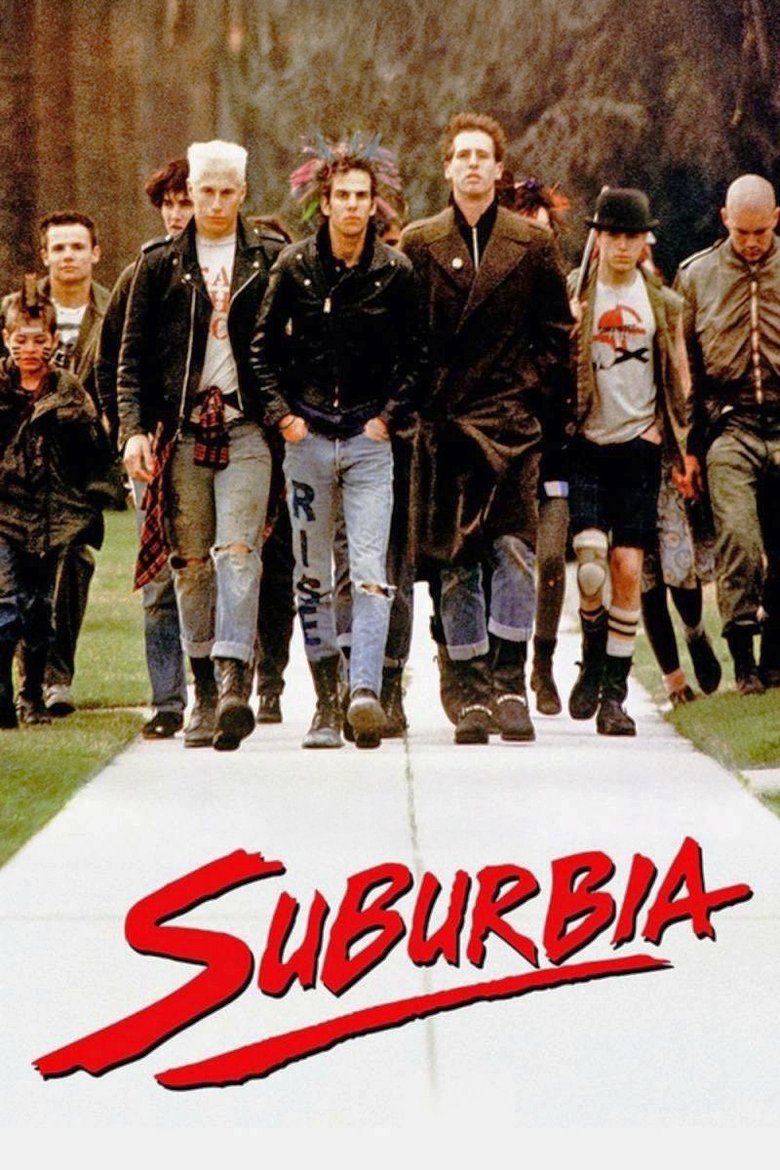
Suburbia
1984
RDirector
Penelope Spheeris
Runtime
94 minutes
Average Rating
No ratings yetSynopsis
When household tensions and a sense of worthlessness overcome Evan, he finds escape when he clings with the orphans of a throw-away society. The runaways hold on to each other like a family until a tragedy tears them apart.
Where to Watch
Diversity & Representation
Overall Score
Fair
Category Breakdown
LGBTQ+ Representation
The film lacks explicit LGBTQ+ narratives or non-cisnormative identities. While the punk subculture provides a sanctuary for diverse identities, the plot focuses on socioeconomic alienation rather than sexual orientation.
Gender Representation
Spheeris disrupts 1980s gender hierarchies by giving female characters like Kim significant social agency. These women navigate the punk scene with independence, challenging the era's typical tropes of submissive femininity.
Racial & Ethnic Diversity
The narrative prioritizes class-based identity over ethnic distinction. While depicting the 'throw-away' youth of Los Angeles, the film lacks a broad spectrum of intersectional racial representation.
Religious & Cultural Diversity
The film offers a profound critique of the nuclear family and suburban consumerism. It prioritizes the 'found family' of the punk subculture over traditional, often oppressive, Western institutions.
Disability Representation
There is no central depiction of physical or neurodivergent disabilities. The characters' struggles are framed through social and psychological alienation rather than specific disability narratives.
Strengths
- Subverts 1980s gender tropes by providing female characters with significant social agency and independence.
- Offers a powerful critique of traditional Western institutions and the nuclear family unit.
- Provides an authentic, non-romanticized look at subcultural identity and the 'found family' dynamic.
Areas for Improvement
- Lacks explicit representation of LGBTQ+ narratives or non-cisnormative identities within the primary plot.
- Focuses heavily on socioeconomic class, resulting in a lack of broad intersectional racial representation.
- Does not feature prominent depictions of physical or neurodivergent disabilities.
AI Analysis
Suburbia is a gritty, docu-style exploration of 1980s punk subculture that prioritizes socioeconomic identity over traditional demographic markers. It succeeds most notably in its subversion of gender roles and its deep critique of mainstream societal structures. While the film excels at portraying female autonomy and the concept of 'found families,' it remains limited in its explicit representation of LGBTQ+ identities and racial diversity. The focus remains heavily on the shared aesthetic and economic struggles of a specific class of marginalized youth. Ultimately, the film's strength lies in its authentic, non-romanticized portrayal of alienation, even if it lacks a wide breadth of intersectional representation.
Rate this Movie
Reviews
No reviews yet. Be the first to share your thoughts on this movie!
Use the rating form above to leave a star rating and optional review.